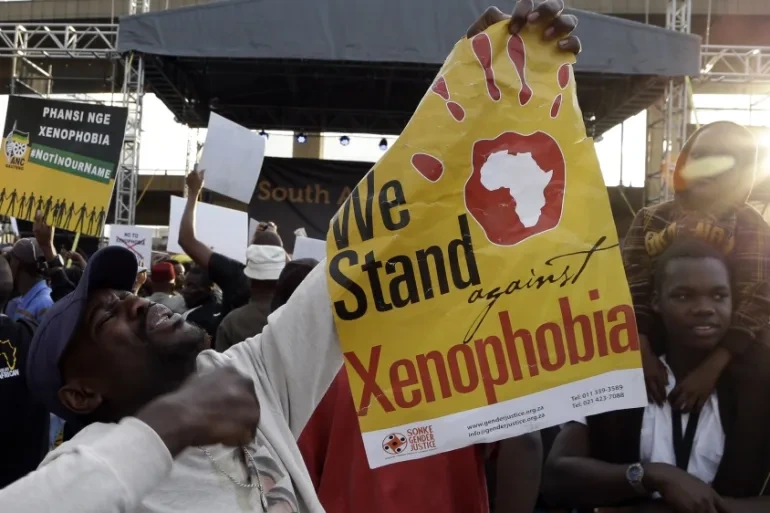
There is perhaps no darker irony in modern African politics than the scenes that periodically erupt on the streets of South Africa’s townships. The same nation that was rescued from the oppressive grip of apartheid by the financial, diplomatic, and moral support of the entire African continent regularly turns on its African brothers and sisters in waves of horrific violence.
Foreign-owned shops are looted and set ablaze. Men, women, and children from countries like Zimbabwe, Nigeria, the Democratic Republic of Congo, and Mozambique are hunted down, beaten, and sometimes murdered.
This is xenophobia in South Africa. But to call it merely a "fear of foreigners" is to fundamentally misunderstand the anatomy of the crisis. In South Africa, xenophobia is a symptom of a deeply sick society—a violent outlet for the rage born of unfulfilled political promises.
But what is the history behind this , back in the years when all this begun
Foreign-owned shops are looted and set ablaze. Men, women, and children from countries like Zimbabwe, Nigeria, the Democratic Republic of Congo, and Mozambique are hunted down, beaten, and sometimes murdered.
This is xenophobia in South Africa. But to call it merely a "fear of foreigners" is to fundamentally misunderstand the anatomy of the crisis. In South Africa, xenophobia is a symptom of a deeply sick society—a violent outlet for the rage born of unfulfilled political promises.
But what is the history behind this , back in the years when all this begun
Xenophobia in South Africa did not emerge overnight; it is deeply rooted in the country's complex history of isolation and socio-economic struggle.
1994–1995: Shortly after the first democratic elections, "Operation Buyelekhaya" (Go Back Home) saw youth gangs in Alexandra attacking migrants they accused of increasing crime and unemployment.
2008: The Great Eruption: In May 2008, a wave of violence began in Alexandra and spread across the country. Over 60 people were killed, and tens of thousands were displaced. The image of Ernesto Nhamuave, a Mozambican man burnt alive, became a haunting symbol of this crisis.
Recent Years: From 2015 to 2025, the violence has evolved from sporadic riots to more organized vigilante campaigns. Groups like Operation Dudula have gained prominence, often physically blocking migrants from accessing public healthcare and schools
1994–1995: Shortly after the first democratic elections, "Operation Buyelekhaya" (Go Back Home) saw youth gangs in Alexandra attacking migrants they accused of increasing crime and unemployment.
2008: The Great Eruption: In May 2008, a wave of violence began in Alexandra and spread across the country. Over 60 people were killed, and tens of thousands were displaced. The image of Ernesto Nhamuave, a Mozambican man burnt alive, became a haunting symbol of this crisis.
Recent Years: From 2015 to 2025, the violence has evolved from sporadic riots to more organized vigilante campaigns. Groups like Operation Dudula have gained prominence, often physically blocking migrants from accessing public healthcare and schools
The Great Betrayal of Pan-Africanism
To understand the visceral pain xenophobia causes across Africa, one must understand the history. During the apartheid era, South Africa’s neighbors suffered immense economic and military destabilization by the white minority regime. Yet, countries like Tanzania, Zambia, Nigeria, and Mozambique harbored ANC freedom fighters, funded the liberation struggle, and provided sanctuary.
When Nelson Mandela walked out of prison in 1990, he was embraced as a continental hero. The expectation was that a free South Africa would be the economic engine that lifted the whole of Africa. Instead, the borders slammed shut, and the new democratic government adopted some of the most restrictive immigration policies on the continent. For many Africans, South Africa’s xenophobia feels like a brutal bite from the hand they fed.
The Anatomy of a Scapegoat - Why do South Africans attack other Africans? The answers are complex, but they are deeply rooted in economics and political failure.
1. The Tinderbox of Unemployment: South Africa has one of the highest unemployment rates in the world, hovering around 32% (and over 45% for youth). In this environment, survival is a zero-sum game. Poor South Africans, living in cramped, under-resourced townships, look at foreign nationals who have managed to open small grocery stores (spaza shops) or find work as mechanics and carpenters, and view them as direct competitors stealing "their" jobs and "their" money.
2. The Informal Sector Battlefield: The failure of the formal economy to absorb millions has pushed people into the informal sector. Here, foreign nationals often thrive. This is not because they are "stealing," but due to sociological factors: foreign migrants often rely on tight-knit ethnic networks (like the Nigerian or Somali business associations) to pool capital and share resources, whereas local South Africans, traumatized by the breakdown of the family unit under apartheid, often lack these communal safety nets. The success of the foreigner is interpreted not as a result of hustle, but as criminality or unfair advantage.
3. The Failure of the State: This is the most critical factor. The post-apartheid government has failed to deliver basic services to millions of its citizens. Townships still lack reliable water, electricity, sanitation, and adequate housing. When communities protest these failures, local politicians and civic leaders frequently use foreign nationals as convenient scapegoats. Instead of admitting they cannot fix the sewers or create jobs, they point to the "illegal foreigners" and say, *“If they weren’t here, you would have work.” It is a deadly political deflection.
In our research we got to investigate on The Mechanics of the Violence
Xenophobic violence in South Africa is rarely a spontaneous uprising of the poor. It is highly organized. During the major outbreaks in 2008, 2015, 2019, and 2022, vigilantism was coordinated.
Groups like "Operation Dudula" (meaning "push back" in Zulu) have emerged, masquerading as community cleanup movements while essentially running targeted hate campaigns. They march into neighborhoods, demanding to see the passports of shop owners, shutting down foreign businesses, and handing them over to locals. The language used is dehumanizing—foreigners are called amakwerekwere (a derogatory slur for Africans speaking unfamiliar languages), cockroaches, and locusts.
Crucially, the violence is heavily intertwined with criminality. Under the guise of "driving out foreigners," heavily armed criminal syndicates loot shops, steal cash, and hijack properties, knowing that the anti-foreigner sentiment provides them with a smokescreen of community approval.
The Culture of Impunity
Perhaps the most infuriating aspect of South African xenophobia for the victims is the culture of impunity. Despite the formation of special task forces and endless political condemnations, prosecutions are incredibly rare.
After the 2008 riots—which left over 60 people dead—very few perpetrators were convicted. When politicians make subtle (and sometimes overt) xenophobic statements, they are rarely censured. The state treats these massacres as isolated incidents of "criminality" rather than what they are: hate crimes. This lack of accountability sends a clear message to the mob: you can loot, burn, and kill, and nothing will happen to you.
The Continental and Economic Blowback
Xenophobia is not just a moral failing; it is an act of economic self-sabotage. South Africa is geographically positioned to be the gateway to Africa, and it desperately needs foreign investment to fix its broken economy.
Every time a xenophobic attack goes viral, the diplomatic fallout is severe. In the past, Nigeria has recalled its ambassador, and boycotts of South African businesses (like MTN, Shoprite, and Multichoice) have been organized across the continent. The continent’s brightest minds—who South Africa should be recruiting to boost its tech and health sectors—are too afraid to move there. South Africa isolates itself precisely when it needs the continent the most.
A Mirror to the Nation's Soul
Xenophobia in South Africa is not a foreign problem; it is a domestic disease. It is the ugly manifestation of a society that has never truly healed from the trauma of apartheid. Apartheid taught South Africans that the "other" was a threat to their survival. Tragically, the liberated state has simply allowed its citizens to redirect that racist infrastructure of hatred away from white minority capital and toward the black foreigner.
Until the South African government addresses the root causes—rampant corruption that starves municipalities of funds, a failing education system, and an economy that does not create jobs—the foreign national will continue to be the sacrificial lamb.
Until then, the Rainbow Nation remains a deeply fractured illusion, stained with the blood of the very people who helped set it free.
To understand the visceral pain xenophobia causes across Africa, one must understand the history. During the apartheid era, South Africa’s neighbors suffered immense economic and military destabilization by the white minority regime. Yet, countries like Tanzania, Zambia, Nigeria, and Mozambique harbored ANC freedom fighters, funded the liberation struggle, and provided sanctuary.
When Nelson Mandela walked out of prison in 1990, he was embraced as a continental hero. The expectation was that a free South Africa would be the economic engine that lifted the whole of Africa. Instead, the borders slammed shut, and the new democratic government adopted some of the most restrictive immigration policies on the continent. For many Africans, South Africa’s xenophobia feels like a brutal bite from the hand they fed.
The Anatomy of a Scapegoat - Why do South Africans attack other Africans? The answers are complex, but they are deeply rooted in economics and political failure.
1. The Tinderbox of Unemployment: South Africa has one of the highest unemployment rates in the world, hovering around 32% (and over 45% for youth). In this environment, survival is a zero-sum game. Poor South Africans, living in cramped, under-resourced townships, look at foreign nationals who have managed to open small grocery stores (spaza shops) or find work as mechanics and carpenters, and view them as direct competitors stealing "their" jobs and "their" money.
2. The Informal Sector Battlefield: The failure of the formal economy to absorb millions has pushed people into the informal sector. Here, foreign nationals often thrive. This is not because they are "stealing," but due to sociological factors: foreign migrants often rely on tight-knit ethnic networks (like the Nigerian or Somali business associations) to pool capital and share resources, whereas local South Africans, traumatized by the breakdown of the family unit under apartheid, often lack these communal safety nets. The success of the foreigner is interpreted not as a result of hustle, but as criminality or unfair advantage.
3. The Failure of the State: This is the most critical factor. The post-apartheid government has failed to deliver basic services to millions of its citizens. Townships still lack reliable water, electricity, sanitation, and adequate housing. When communities protest these failures, local politicians and civic leaders frequently use foreign nationals as convenient scapegoats. Instead of admitting they cannot fix the sewers or create jobs, they point to the "illegal foreigners" and say, *“If they weren’t here, you would have work.” It is a deadly political deflection.
In our research we got to investigate on The Mechanics of the Violence
Xenophobic violence in South Africa is rarely a spontaneous uprising of the poor. It is highly organized. During the major outbreaks in 2008, 2015, 2019, and 2022, vigilantism was coordinated.
Groups like "Operation Dudula" (meaning "push back" in Zulu) have emerged, masquerading as community cleanup movements while essentially running targeted hate campaigns. They march into neighborhoods, demanding to see the passports of shop owners, shutting down foreign businesses, and handing them over to locals. The language used is dehumanizing—foreigners are called amakwerekwere (a derogatory slur for Africans speaking unfamiliar languages), cockroaches, and locusts.
Crucially, the violence is heavily intertwined with criminality. Under the guise of "driving out foreigners," heavily armed criminal syndicates loot shops, steal cash, and hijack properties, knowing that the anti-foreigner sentiment provides them with a smokescreen of community approval.
The Culture of Impunity
Perhaps the most infuriating aspect of South African xenophobia for the victims is the culture of impunity. Despite the formation of special task forces and endless political condemnations, prosecutions are incredibly rare.
After the 2008 riots—which left over 60 people dead—very few perpetrators were convicted. When politicians make subtle (and sometimes overt) xenophobic statements, they are rarely censured. The state treats these massacres as isolated incidents of "criminality" rather than what they are: hate crimes. This lack of accountability sends a clear message to the mob: you can loot, burn, and kill, and nothing will happen to you.
The Continental and Economic Blowback
Xenophobia is not just a moral failing; it is an act of economic self-sabotage. South Africa is geographically positioned to be the gateway to Africa, and it desperately needs foreign investment to fix its broken economy.
Every time a xenophobic attack goes viral, the diplomatic fallout is severe. In the past, Nigeria has recalled its ambassador, and boycotts of South African businesses (like MTN, Shoprite, and Multichoice) have been organized across the continent. The continent’s brightest minds—who South Africa should be recruiting to boost its tech and health sectors—are too afraid to move there. South Africa isolates itself precisely when it needs the continent the most.
A Mirror to the Nation's Soul
Xenophobia in South Africa is not a foreign problem; it is a domestic disease. It is the ugly manifestation of a society that has never truly healed from the trauma of apartheid. Apartheid taught South Africans that the "other" was a threat to their survival. Tragically, the liberated state has simply allowed its citizens to redirect that racist infrastructure of hatred away from white minority capital and toward the black foreigner.
Until the South African government addresses the root causes—rampant corruption that starves municipalities of funds, a failing education system, and an economy that does not create jobs—the foreign national will continue to be the sacrificial lamb.
Until then, the Rainbow Nation remains a deeply fractured illusion, stained with the blood of the very people who helped set it free.