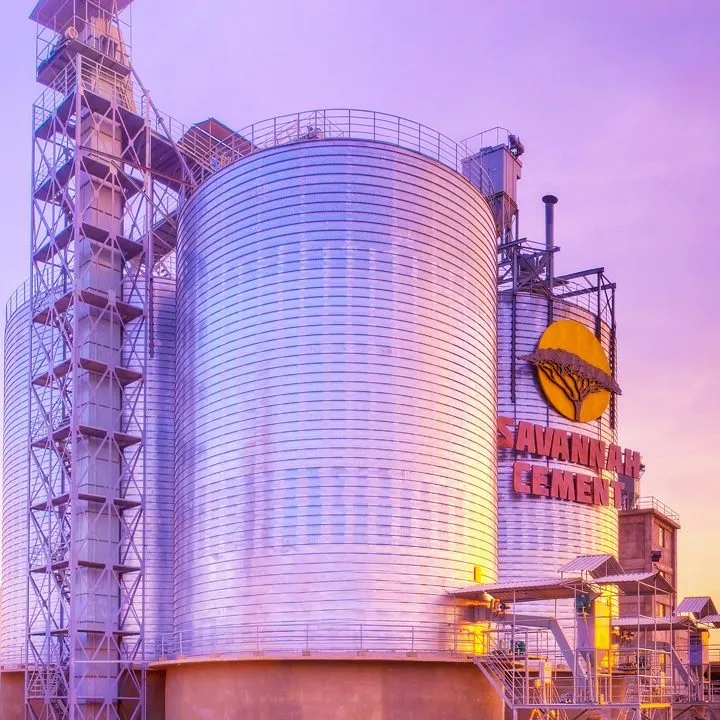
For anyone driving along the Namanga Road toward Athi River, the towering silos of Savannah Cement are a familiar landmark against the Kenyan skyline. Often referred to as the "youngest" major entrant in the local cement industry, Savannah has spent the last decade carving out a reputation for being more than just a manufacturer—it has become a symbol of industrial resilience and regional ambition.
The Vision: Eco-Friendly Foundations
When Savannah Cement launched in 2012, it didn’t just want to be another player in a market dominated by century-old giants. Its strategy was built on two pillars: technology and location.
The company commissioned a state-of-the-art, eco-friendly grinding plant in Athi River, strategically positioned just 30 kilometers from Nairobi. Given that the capital city accounts for nearly half of the country’s cement consumption, this was a masterstroke of logistics. The plant was designed with a capacity of 1.5 million tons per year, utilizing green technology to minimize dust emissions and energy consumption, setting a new standard for environmental management in the regional industry.
The Products: Building "Perfection"
The brand’s promise, "Building Perfection," is backed by a product line engineered for the diverse needs of East Africa’s construction boom. Their core offerings include:
- Ordinary Portland Cement (OPC): High-strength cement used for heavy-duty structural work, bridges, and high-rise buildings.
- Portland Pozzolana Cement (PPC): A versatile, durable option popular for general construction, plastering, and bricklaying due to its resistance to chemical attacks.
These products haven't just stayed within Kenya's borders. Savannah has aggressively pursued a "regional footprint," supplying major infrastructure projects and residential developments across Uganda, Rwanda, South Sudan, and Tanzania.
Navigating the Storm: A Story of Survival
It hasn’t all been smooth sailing. Like many industrial heavyweights, Savannah Cement faced a turbulent period between 2022 and 2024. The company was placed under receivership in May 2023 due to significant debt obligations to KCB and Absa Bank, totaling billions of shillings. For a while, the future of the Athi River plant seemed uncertain, casting a shadow over its hundreds of employees and extensive distribution network.
However, in a dramatic turn of events that concluded in August 2025, Savannah Cement found a second lease on life. A consortium of Kenya’s leading flour millers—the owners behind household names like Mombasa Maize Millers (Dola) and Kitui Flour Millers (Taifa)—acquired the company for approximately US$29.4 million (KES 3.8 billion).
This acquisition wasn't just a financial rescue; it was a strategic pivot. These "milling tycoons" brought with them massive logistics networks and deep experience in large-scale processing. Their entry marked the birth of Savannah Cement 2025 Limited, a rejuvenated entity focused on efficiency and reclaiming its 15% market share.
Sustainability and Community
Beyond the concrete, Savannah has always emphasized its role as a corporate citizen. Their sustainability strategy focuses on four key areas:
- Environment: Maintaining low-carbon footprints through efficient grinding technology.
- Safety: Prioritizing the health and well-being of their 200+ employees.
- Education: Supporting local schools and vocational training in the Kajiado and Machakos regions.
- Sports: Engaging the youth through community sports sponsorships.
Looking Ahead
As of 2026, Savannah Cement stands at a fascinating crossroads. With the backing of its new investors and a renewed focus on regional trade, the company is well-positioned to capitalize on Kenya’s "Big Four" agenda legacy and the growing demand for affordable housing.
For the average builder in Kitengela or the contractor working on a new highway in the Rift Valley, Savannah remains a go-to choice—not just for the quality of the bag, but for the story of a Kenyan brand that refused to stay down. It is a reminder that in the world of construction, the strongest foundations are often the ones that have been tested the most.