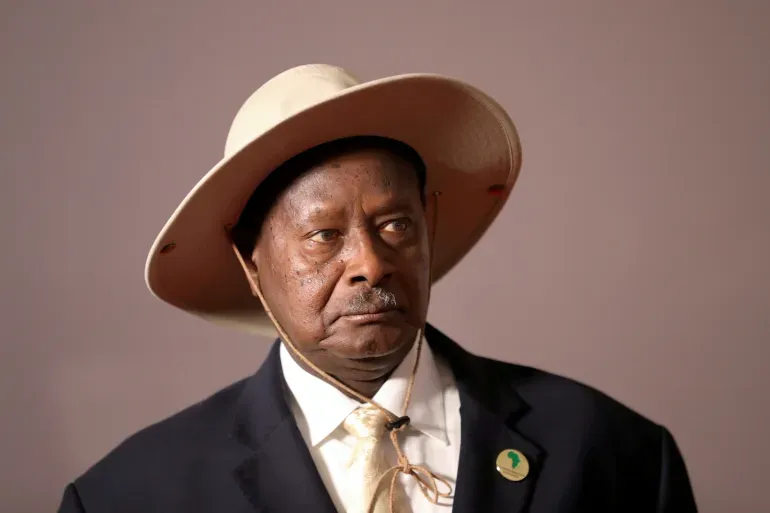
Few leaders in Africa have left as deep and lasting a mark on their nations as Yoweri Museveni. A revolutionary turned long-serving president, Museveni’s journey is one of war, power, transformation, and controversy. His story is not just about leadership—it is about endurance, strategy, and the complex reality of governing a nation through decades of change.
From Guerrilla Fighter to President
Born in 1944 in southwestern Uganda, Museveni’s early life was shaped by education and political awareness. He studied political science at the University of Dar es Salaam, where revolutionary ideas were widespread. It was here that his vision for Uganda began to take shape.
Uganda, during the 1970s and early 1980s, was a nation in turmoil. The brutal rule of Idi Amin and subsequent instability left the country fractured. Museveni rose as a key figure during this chaos, leading a guerrilla movement known as the National Resistance Army.
After years of bush warfare, Museveni captured power in 1986, marking the end of a violent chapter in Uganda’s history. His victory was seen by many as a fresh start—a chance for stability, unity, and rebuilding.
A Vision of Stability and Growth
When Museveni took office, Uganda’s economy and institutions were in ruins. Through reforms and partnerships with international bodies, his government focused on economic recovery. Infrastructure improved, education expanded, and healthcare systems were strengthened.
Uganda began to stabilize, and for a time, Museveni was praised globally as part of a “new generation” of African leaders—visionary, pragmatic, and reform-oriented.
He also played a key role in regional politics, involving Uganda in peacekeeping and influencing events in neighboring countries. His leadership extended beyond borders, positioning Uganda as a significant player in East Africa.
The Shadow of Longevity in Power
However, Museveni’s long rule has also drawn criticism. Over time, constitutional changes allowed him to extend his presidency, removing term and age limits. Critics argue that this undermines democracy, while supporters claim continuity has ensured stability.
Opposition voices have often faced restrictions, and elections have been contested. Political figures like Kizza Besigye and Bobi Wine have challenged his leadership, bringing attention to issues of governance, freedom, and political space.
This tension between stability and democratic ideals continues to define Museveni’s legacy.
A Complex Legacy
Museveni’s story cannot be told in simple terms. On one hand, he brought Uganda back from collapse, fostering economic growth and relative peace after years of conflict. On the other, his extended stay in power raises difficult questions about democracy and leadership transition in Africa.
Is he a liberator who saved a nation, or a leader who stayed too long? The answer depends on perspective.
Conclusion: A Leader Who Redefined an Era
As Uganda continues to evolve, the impact of Yoweri Museveni remains undeniable. His leadership has shaped generations, influenced regional politics, and sparked debates that go beyond Uganda’s borders.
Whether admired or criticized, Museveni stands as one of Africa’s most enduring and influential leaders—a man whose story is still being written, even after decades at the helm.