Just as the country grapples with the heat of the ongoing "Long Rains" season, the Kenya Meteorological Department (KMD) has issued a fresh advisory, warning of intensified rainfall across several parts of the country. According to the forecast released on April 21, 2026, moderate to heavy rainfall is expected to sweep across the nation from today April 22 to April 27, 2026, bringing a much-needed but potentially hazardous reprieve from the recent dry spells.
They have highlighted that the intensity of the rain is set to increase significantly, particularly in the Coastal regions, Northeastern Kenya, and the Southeastern Lowlands. Counties such as Mombasa, Kilifi, Kwale, Lamu, Garissa, Mandera, Wajir, and Tana River are on high alert.
The advisory warns of:
Flash Floods: Rapid accumulations of water, even in areas that haven't seen direct heavy downpours, especially in downstream zones.
Strong Winds: Gusty winds exceeding 25 knots (approx. 46 km/h) are expected to accompany the storms, potentially damaging roofs and toppling trees.
Rough Seas: Along the coast, wave heights are projected to rise above 2 meters, posing a significant risk to small boats and maritime activities.
Flash Floods: Rapid accumulations of water, even in areas that haven't seen direct heavy downpours, especially in downstream zones.
Strong Winds: Gusty winds exceeding 25 knots (approx. 46 km/h) are expected to accompany the storms, potentially damaging roofs and toppling trees.
Rough Seas: Along the coast, wave heights are projected to rise above 2 meters, posing a significant risk to small boats and maritime activities.
But what is the Impact on Key Regions ?
While the Coast and North face the heaviest warnings, other regions will not be entirely dry.
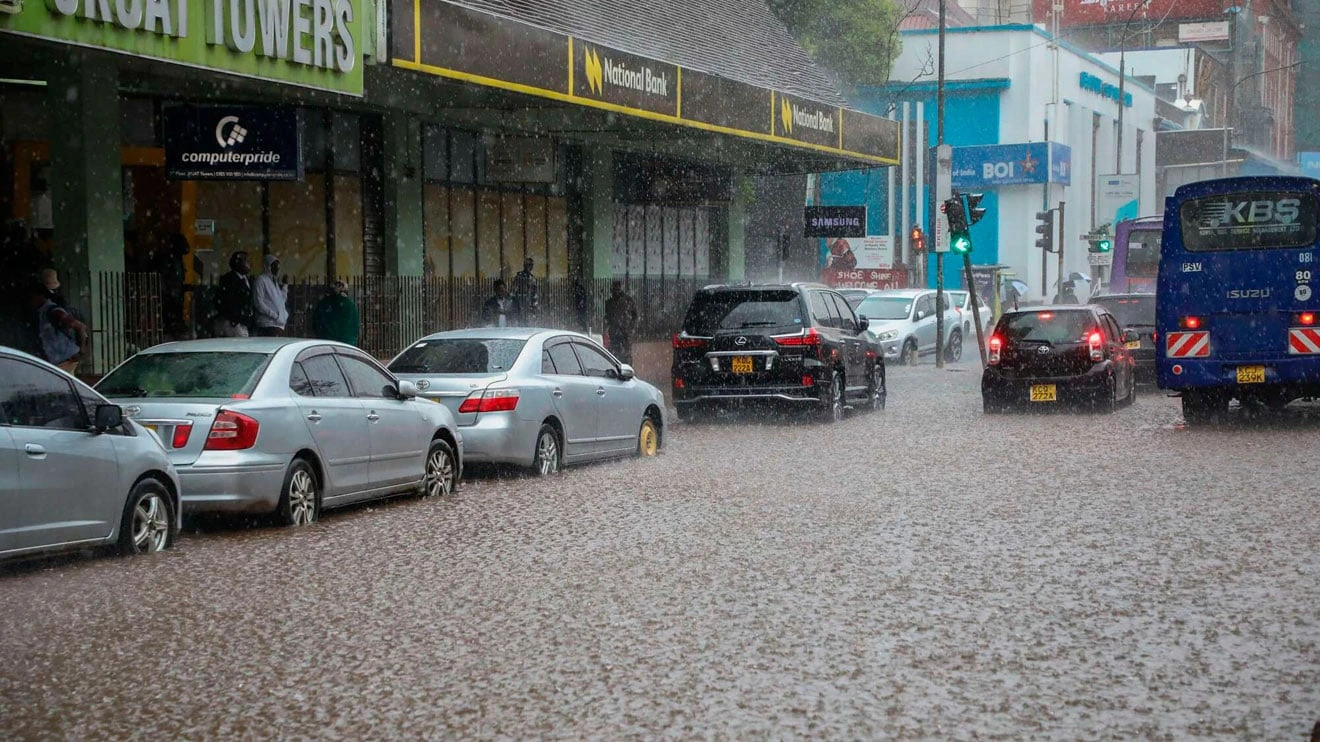
Highlands and Nairobi: Near-average rainfall is expected to continue, mostly during afternoon and evening hours, which may cause the usual traffic snarl-ups in the capital.
The Lake Victoria Basin: Persistent showers and thunderstorms are forecast, maintaining the moisture levels for the ongoing planting season.
Arid and Semi-Arid Lands : In parts of Kajiado and Machakos, the rain is welcomed by pastoralists, though the threat of lightning in open fields remains a critical safety concern.
Highlands and Nairobi: Near-average rainfall is expected to continue, mostly during afternoon and evening hours, which may cause the usual traffic snarl-ups in the capital.
The Lake Victoria Basin: Persistent showers and thunderstorms are forecast, maintaining the moisture levels for the ongoing planting season.
Arid and Semi-Arid Lands : In parts of Kajiado and Machakos, the rain is welcomed by pastoralists, though the threat of lightning in open fields remains a critical safety concern.
Some of the Safety and Precautionary Measures include ;
In light of the fatalities recorded during the early March rains, the government has urged citizens to remain vigilant. The Met Department has issued a clear set of safety guidelines:
1. Avoid Water Crossings: Never attempt to drive or walk through moving water or flooded roads.
2. Seek Proper Shelter: Avoid sheltering under trees or standing in open fields during thunderstorms to minimize the risk of lightning strikes.
3. Drainage Management: Residents in urban areas, particularly in flood-prone neighborhoods like those in Nairobi and Kitengela, are encouraged to clear blocked drainage channels around their homes.
In light of the fatalities recorded during the early March rains, the government has urged citizens to remain vigilant. The Met Department has issued a clear set of safety guidelines:
1. Avoid Water Crossings: Never attempt to drive or walk through moving water or flooded roads.
2. Seek Proper Shelter: Avoid sheltering under trees or standing in open fields during thunderstorms to minimize the risk of lightning strikes.
3. Drainage Management: Residents in urban areas, particularly in flood-prone neighborhoods like those in Nairobi and Kitengela, are encouraged to clear blocked drainage channels around their homes.
For farmers, this surge in rainfall marks the peak of the March-April-May . If managed correctly, the moisture will be a boon for food security later in the year. However, for the urban dweller, the forecast serves as a reminder to carry an umbrella, leave work a bit earlier, and stay tuned to local radio and social media updates for real-time weather alerts.