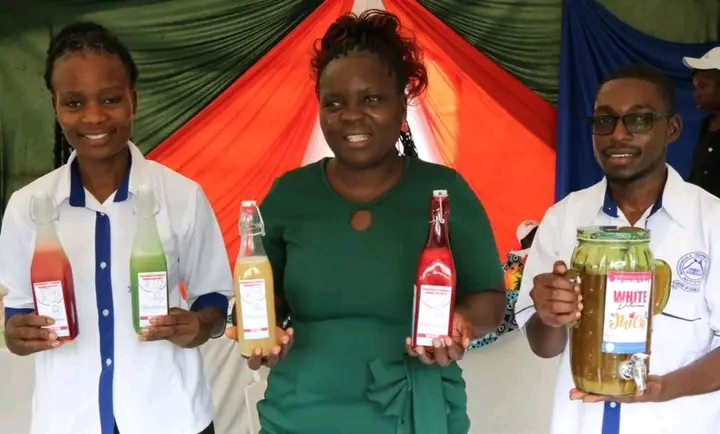
A group of enterprising students at Bushiangala Technical Training Institute in Kakamega is redefining the way traditional herbs are consumed in Kenya. Under the mentorship of Ms. Linda Lutela, a lecturer at the institute, the students have successfully developed a line of products—including wine, juice, supplements, and chocolates—from the Mukombero plant, also known as Mondia Whitei. Their innovative approach has not only earned them a spot at the National TVET Fair but is also creating a new avenue for value addition in local agriculture.
For years, Mukombero has been a staple among local communities in Western Kenya, mainly chewed for its reputed health benefits. Locals have long associated the root with boosting libido, improving overall vitality, and even lowering cholesterol levels. Despite its traditional use, the plant has largely remained untapped as a commercial product. That changed when Ms. Lutela spotted an opportunity to combine scientific knowledge with local resources.
A Spark of Inspiration
The journey began when Ms. Lutela encountered a man selling Mukombero in bulk during a routine visit to a local market. Recognizing the untapped potential of the herb, she began contemplating ways to transform it into more accessible and enjoyable forms for the general public. “I thought, why limit this powerful root to chewing? There must be a way to make it more appealing while retaining its benefits,” Ms. Lutela explained in an interview with Nation Africa.
After exploring the idea, she approached the principal of Bushiangala Technical Training Institute, who was impressed by the vision and immediately pledged the school’s support. With the green light from administration, Ms. Lutela rallied her students from the Food and Beverage program to explore the possibilities. Together, they embarked on extensive research into the herb’s nutritional profile, chemical composition, and potential health benefits.
From Concept to Creation
The team’s mission was clear: to create a product that is both enjoyable and beneficial to the public. They developed a systematic process to extract the essence of Mukombero, allowing it to be transformed into multiple products.
The process begins with sourcing fresh Mukombero roots from local farmers. Once acquired, the roots are carefully sorted and cleaned before being blended into a fine mixture. To produce the juice, the team extracts the natural essence of the roots and mixes it with natural sweeteners and preservatives such as honey, ginger, garlic, and lemon. This combination ensures that the drink is not only flavorful but also retains the herb’s health-promoting properties.
For the wine, the blended mixture undergoes a fermentation process for seven days before being packaged. The students also produce Mukombero-based supplements and chocolates, expanding the product line and appealing to different tastes and preferences. Each product undergoes rigorous quality checks and has been certified by the Kenya Bureau of Standards (KEBS), ensuring safety and consistency.
Affordable and Accessible
The students have made their products reasonably priced to attract a wide range of consumers. A glass of Mukombero juice retails for just Sh50, while the supplements and chocolates are similarly priced at Sh50 each. The wine and larger packaged products range from Sh500 to Sh1,200, making them accessible to both individual consumers and potential commercial buyers.
Initially, the institute’s students and lecturers became the first customers, providing valuable feedback that helped refine the final products. This hands-on approach has not only strengthened the students’ practical skills but has also created a sense of ownership and pride in their work.
Commercial Ambitions and Community Impact
While the project was born from Ms. Lutela’s vision, she has deliberately left its management and commercialization in the hands of the students. Their goal is to develop a scalable model that benefits both consumers and local farmers. By partnering with Mukombero growers, the team hopes to ensure a consistent supply of raw materials, supporting local agriculture and creating sustainable livelihoods in the process.
The team’s ambition goes beyond commercial success; they hope to introduce the masses to a healthier alternative to conventional beverages. By creating a product that combines traditional knowledge with modern food science, they are bridging the gap between cultural heritage and contemporary consumer preferences.
Recognition and Future Prospects
Their ingenuity has not gone unnoticed. Securing a spot at the National TVET Fair provides the team with a platform to showcase their products to a broader audience, attracting potential investors, partners, and consumers. This exposure is crucial for expanding production and reaching commercial markets across Kenya and possibly beyond.
Ms. Lutela emphasizes that the ultimate goal is to create a self-sustaining model where students can continue innovating while contributing to the local economy. “The project is about empowering students, supporting farmers, and promoting health. It’s a win-win for everyone involved,” she says.
The Mukombero project at Bushiangala Technical Training Institute is a shining example of how education, innovation, and cultural heritage can converge to create meaningful impact. By transforming a traditionally chewed herb into a versatile product line, the students and their mentor are not only unlocking new economic opportunities but are also redefining how traditional knowledge can be modernized for the benefit of society.
As the team continues to refine their products and expand their reach, the story of Mukombero wine, juice, and supplements serves as an inspiring model for other institutions seeking to blend education, entrepreneurship, and cultural preservation. With passion, creativity, and scientific rigor, a humble herb has been elevated into a symbol of innovation and possibility for young Kenyans.
For years, Mukombero has been a staple among local communities in Western Kenya, mainly chewed for its reputed health benefits. Locals have long associated the root with boosting libido, improving overall vitality, and even lowering cholesterol levels. Despite its traditional use, the plant has largely remained untapped as a commercial product. That changed when Ms. Lutela spotted an opportunity to combine scientific knowledge with local resources.
A Spark of Inspiration
The journey began when Ms. Lutela encountered a man selling Mukombero in bulk during a routine visit to a local market. Recognizing the untapped potential of the herb, she began contemplating ways to transform it into more accessible and enjoyable forms for the general public. “I thought, why limit this powerful root to chewing? There must be a way to make it more appealing while retaining its benefits,” Ms. Lutela explained in an interview with Nation Africa.
After exploring the idea, she approached the principal of Bushiangala Technical Training Institute, who was impressed by the vision and immediately pledged the school’s support. With the green light from administration, Ms. Lutela rallied her students from the Food and Beverage program to explore the possibilities. Together, they embarked on extensive research into the herb’s nutritional profile, chemical composition, and potential health benefits.
From Concept to Creation
The team’s mission was clear: to create a product that is both enjoyable and beneficial to the public. They developed a systematic process to extract the essence of Mukombero, allowing it to be transformed into multiple products.
The process begins with sourcing fresh Mukombero roots from local farmers. Once acquired, the roots are carefully sorted and cleaned before being blended into a fine mixture. To produce the juice, the team extracts the natural essence of the roots and mixes it with natural sweeteners and preservatives such as honey, ginger, garlic, and lemon. This combination ensures that the drink is not only flavorful but also retains the herb’s health-promoting properties.
For the wine, the blended mixture undergoes a fermentation process for seven days before being packaged. The students also produce Mukombero-based supplements and chocolates, expanding the product line and appealing to different tastes and preferences. Each product undergoes rigorous quality checks and has been certified by the Kenya Bureau of Standards (KEBS), ensuring safety and consistency.
Affordable and Accessible
The students have made their products reasonably priced to attract a wide range of consumers. A glass of Mukombero juice retails for just Sh50, while the supplements and chocolates are similarly priced at Sh50 each. The wine and larger packaged products range from Sh500 to Sh1,200, making them accessible to both individual consumers and potential commercial buyers.
Initially, the institute’s students and lecturers became the first customers, providing valuable feedback that helped refine the final products. This hands-on approach has not only strengthened the students’ practical skills but has also created a sense of ownership and pride in their work.
Commercial Ambitions and Community Impact
While the project was born from Ms. Lutela’s vision, she has deliberately left its management and commercialization in the hands of the students. Their goal is to develop a scalable model that benefits both consumers and local farmers. By partnering with Mukombero growers, the team hopes to ensure a consistent supply of raw materials, supporting local agriculture and creating sustainable livelihoods in the process.
The team’s ambition goes beyond commercial success; they hope to introduce the masses to a healthier alternative to conventional beverages. By creating a product that combines traditional knowledge with modern food science, they are bridging the gap between cultural heritage and contemporary consumer preferences.
Recognition and Future Prospects
Their ingenuity has not gone unnoticed. Securing a spot at the National TVET Fair provides the team with a platform to showcase their products to a broader audience, attracting potential investors, partners, and consumers. This exposure is crucial for expanding production and reaching commercial markets across Kenya and possibly beyond.
Ms. Lutela emphasizes that the ultimate goal is to create a self-sustaining model where students can continue innovating while contributing to the local economy. “The project is about empowering students, supporting farmers, and promoting health. It’s a win-win for everyone involved,” she says.
The Mukombero project at Bushiangala Technical Training Institute is a shining example of how education, innovation, and cultural heritage can converge to create meaningful impact. By transforming a traditionally chewed herb into a versatile product line, the students and their mentor are not only unlocking new economic opportunities but are also redefining how traditional knowledge can be modernized for the benefit of society.
As the team continues to refine their products and expand their reach, the story of Mukombero wine, juice, and supplements serves as an inspiring model for other institutions seeking to blend education, entrepreneurship, and cultural preservation. With passion, creativity, and scientific rigor, a humble herb has been elevated into a symbol of innovation and possibility for young Kenyans.