The history of free education in Kenya is a journey from traditional community learning to a hard-fought political promise. It has been a cornerstone of the nation’s identity since independence, viewed as the primary weapon against what the founding fathers called the "three enemies of development": poverty, ignorance, and disease.
1. Pre-Colonial and Missionary Foundations
Before the formal classroom, education was free but informal. Indigenous education was a community responsibility, where elders passed on skills and moral values through apprenticeships.
In the mid-19th century, Christian missionaries introduced formal schooling. Their primary goal was literacy to enable Africans to read the Bible. While these schools charged nominal fees or required labor, they laid the groundwork for the structured "Western" school system.
2. The Post-Independence Vision (1963)
When Kenya gained independence in 1963, the government published Sessional Paper No. 10 of 1965, which framed education as a right and a tool for national building.
The Ominde Commission (1964): This was the first giant leap. It recommended a national education system that promoted unity.
Harambee Schools: Because the government couldn't afford to build schools everywhere, Mzee Jomo Kenyatta championed the "Harambee" (pulling together) spirit. Communities built their own schools, and the government eventually took over the cost of paying teachers.
3. The First Attempt: 1970s and 80s
The dream of "Free Primary Education" (FPE) was first tested in the 1970s:
1974: Presidential Decree abolished fees for Standards 1 through 4.
1978: This was extended to the full primary cycle (Standards 1–7).
The Outcome: Enrollment skyrocketed, but the system struggled with a lack of infrastructure. This eventually led to the introduction of "cost-sharing" in the late 1980s due to economic pressures from the World Bank and IMF, effectively ending the "free" era for a decade.
4. The 2003 Revolution: Universal FPE
The most significant milestone in Kenyan history occurred in January 2003 under President Mwai Kibaki. Fulfilling a major campaign promise, the NARC government abolished all tuition fees in public primary schools.
The "Kibaki Effect": Over 1.3 million additional children showed up to school in a single week.
Kimani Maruge: This era became world-famous when 84-year-old Kimani Maruge enrolled in Standard 1, proving that free education was a gateway for everyone, regardless of age.
5. Free Day Secondary Education (FDSE)
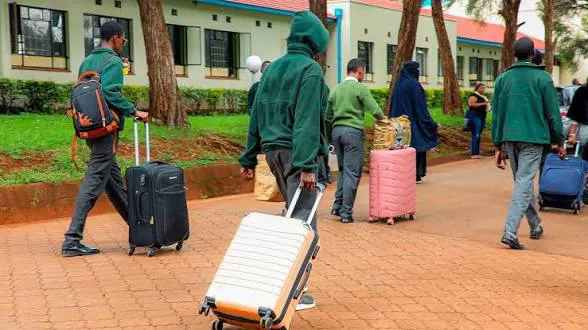
In 2008, the government extended this vision to secondary schools. While "boarding" schools still charge for food and accommodation, the government began subsidizing "day" secondary education to ensure a higher transition rate from primary school.
6. The Current Era: 100% Transition and CBC
Today, Kenya operates under a policy of 100% transition, meaning every child who finishes primary school is mandated to join a secondary school, with the government covering the bulk of the costs.
The introduction of the Competency Based Curriculum (CBC) represents the latest evolution, shifting the focus from rote memorization to practical skills, though it continues the "free" mandate in public institutions funded by the taxpayer.
Summary Table: Milestones of Kenyan Free Education
Period Key Action Leader/Body
1964 Ominde Commission established Jomo Kenyatta
1974 Abolition of fees for Standards 1-4 Jomo Kenyatta
2003 Launch of Universal Free Primary Education Mwai Kibaki
2008 Launch of Free Day Secondary Education Mwai Kibaki
2018 100% Transition Policy initiated Uhuru Kenyatta
1. Pre-Colonial and Missionary Foundations
Before the formal classroom, education was free but informal. Indigenous education was a community responsibility, where elders passed on skills and moral values through apprenticeships.
In the mid-19th century, Christian missionaries introduced formal schooling. Their primary goal was literacy to enable Africans to read the Bible. While these schools charged nominal fees or required labor, they laid the groundwork for the structured "Western" school system.
2. The Post-Independence Vision (1963)
When Kenya gained independence in 1963, the government published Sessional Paper No. 10 of 1965, which framed education as a right and a tool for national building.
The Ominde Commission (1964): This was the first giant leap. It recommended a national education system that promoted unity.
Harambee Schools: Because the government couldn't afford to build schools everywhere, Mzee Jomo Kenyatta championed the "Harambee" (pulling together) spirit. Communities built their own schools, and the government eventually took over the cost of paying teachers.
3. The First Attempt: 1970s and 80s
The dream of "Free Primary Education" (FPE) was first tested in the 1970s:
1974: Presidential Decree abolished fees for Standards 1 through 4.
1978: This was extended to the full primary cycle (Standards 1–7).
The Outcome: Enrollment skyrocketed, but the system struggled with a lack of infrastructure. This eventually led to the introduction of "cost-sharing" in the late 1980s due to economic pressures from the World Bank and IMF, effectively ending the "free" era for a decade.
4. The 2003 Revolution: Universal FPE
The most significant milestone in Kenyan history occurred in January 2003 under President Mwai Kibaki. Fulfilling a major campaign promise, the NARC government abolished all tuition fees in public primary schools.
The "Kibaki Effect": Over 1.3 million additional children showed up to school in a single week.
Kimani Maruge: This era became world-famous when 84-year-old Kimani Maruge enrolled in Standard 1, proving that free education was a gateway for everyone, regardless of age.
5. Free Day Secondary Education (FDSE)
In 2008, the government extended this vision to secondary schools. While "boarding" schools still charge for food and accommodation, the government began subsidizing "day" secondary education to ensure a higher transition rate from primary school.
6. The Current Era: 100% Transition and CBC
Today, Kenya operates under a policy of 100% transition, meaning every child who finishes primary school is mandated to join a secondary school, with the government covering the bulk of the costs.
The introduction of the Competency Based Curriculum (CBC) represents the latest evolution, shifting the focus from rote memorization to practical skills, though it continues the "free" mandate in public institutions funded by the taxpayer.
Summary Table: Milestones of Kenyan Free Education
Period Key Action Leader/Body
1964 Ominde Commission established Jomo Kenyatta
1974 Abolition of fees for Standards 1-4 Jomo Kenyatta
2003 Launch of Universal Free Primary Education Mwai Kibaki
2008 Launch of Free Day Secondary Education Mwai Kibaki
2018 100% Transition Policy initiated Uhuru Kenyatta