Just over a year after assuming the role of Kenya’s second-in-command following the impeachment of Rigathi Gachagua, Deputy President Kithure Kindiki finds himself in a political vortex. While President William Ruto has publicly declared Kindiki "the real deal" and critics "will be ashamed," the political landscape ahead of the August 2027 General Election suggests that Kindiki’s position is anything but secure.
As coalition talks intensify and regional barons jockey for power, the question dominating Kenya’s political discourse is clear: Will Kithure Kindiki remain Deputy President beyond 2027 ?
The "Non-Negotiable" Stance from Mt. Kenya
For leaders from the Mt. Kenya region, the answer is a definitive yes—and they are willing to fight for it. Since Kindiki ascended to the office in October 2024, a significant faction of Mt. Kenya politicians has adopted a hardline stance: the Deputy President's seat belongs to the region, and specifically, to Kindiki.
In February 2026, a cohort of UDA Members of Parliament from the region declared that the position is "not negotiable." Public Service Cabinet Secretary Geoffrey Ruku has been particularly vocal, stating, "There is no vacancy now, and there will be no vacancy in 2027." The leaders argue that Kindiki has demonstrated unwavering loyalty and that the region deserves to hold the seat until at least 2032, positioning him as the natural heir to President Ruto.
This sentiment was echoed recently in Tharaka-Nithi County, where President Ruto himself defended his deputy against what he termed contempt and insults from critics. Ruto emphasized that Kindiki holds the office by "constitutional mandate" and "God’s plan," urging him to ignore detractors.
The ODM Threat: A Coalition Demand
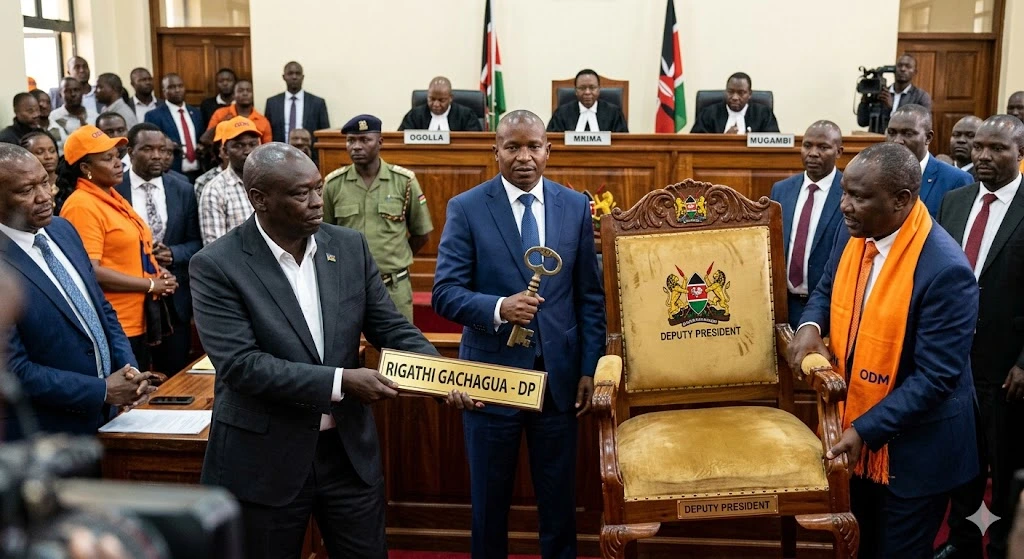
The most immediate threat to Kindiki’s tenure does not necessarily come from his boss, but from within the ruling coalition. The death of opposition chief Raila Odinga fractured the Orange Democratic Movement (ODM), but the faction led by Dr. Oburu Oginga has made its support for Ruto’s 2027 bid conditional: they want the Deputy President’s slot.
ODM leaders argue that as part of the "broad-based" government, they deserve a stake at the highest table. This has caused panic among Kindiki’s allies. In February, Mt. Kenya leaders threatened to bolt from the coalition if the DP seat is ceded to ODM. Kiambaa MP Njuguna Kawanjiku warned that the number two position is the only thing that could break the union.
However, political analysts suggest this push might be less about the seat itself and more about "zoning" —securing guarantees that UDA will not field candidates against ODM politicians in their strongholds like Luo Nyanza. For President Ruto, the balancing act is delicate. Removing the deputy presidency from Mt. Kenya risks giving his predecessor, Rigathi Gachagua, massive political ammunition to rally the region in opposition.
The Gachagua Factor
The ghost of Rigathi Gachagua continues to haunt Kindiki’s political calculations. Gachagua, who now leads the Democracy for Citizens Party (DCP), has refused to fade away. He has increasingly positioned himself as the protector of Mt. Kenya interests, recently accusing Kindiki of breaching cultural norms by discussing succession politics before a deceased MP was buried.
Political analyst Prof. Macharia Munene notes that Kindiki was selected as a test—to see if he could replicate Gachagua’s influence over the Mt. Kenya voting bloc, which delivered 87% of its votes to Ruto in 2022.
Early indicators are mixed. A by-election in Mbeere North in November 2025 saw a significant dip in voter turnout and government support. Analyst Prof. Peter Kagwanja suggests this represents a "more than 60 per cent dip in President Ruto’s popularity"in some areas, signaling that the region's loyalty is not a given.
Kindiki’s Strategy: Service over Politics
Facing these headwinds, Deputy President Kindiki is adopting a strategy of "strategic patience." He has largely avoided engaging in public spats with Gachagua or responding aggressively to ODM demands. Instead, he is leaning heavily into his official mandate.
Recently, Kindiki has been chairing high-level meetings on the national drought response, touring the country for development projects (roads, electricity, and housing), and preaching a gospel of service delivery over "chest-thumping." In Meru, he recently remarked, *"Positions come and go... There is life beyond this service,"* a statement analysts interpret as a recognition that his political survival depends on performance, not just alliances.
So, what will happen to Kithure Kindiki?
In the short term, he remains Deputy President with the full endorsement of President Ruto. However, the political arithmetic for 2027 is brutal. President Ruto needs to expand his voter base beyond Mt. Kenya to secure a second term. That expansion likely requires a running mate or key alliance partner from another region—a demand ODM is currently fronting.
If Ruto chooses to retain Kindiki, he risks alienating potential coalition partners from the Coast, Western, or Nyanza. If Ruto drops Kindiki in favor of a different running mate to balance the ticket, he risks a revolt in Mt. Kenya, where voters might defect to the Gachagua-led opposition.
For now, Kindiki is holding the line. But in Kenya’s high-stakes political theatre, as one analyst put it, one misstep could end his career, while a calculated move could make him president in 2032. The next 18 months will determine whether Kithure Kindiki is the long-term heir or just a placeholder in a turbulent political season.
As coalition talks intensify and regional barons jockey for power, the question dominating Kenya’s political discourse is clear: Will Kithure Kindiki remain Deputy President beyond 2027 ?
The "Non-Negotiable" Stance from Mt. Kenya
For leaders from the Mt. Kenya region, the answer is a definitive yes—and they are willing to fight for it. Since Kindiki ascended to the office in October 2024, a significant faction of Mt. Kenya politicians has adopted a hardline stance: the Deputy President's seat belongs to the region, and specifically, to Kindiki.
In February 2026, a cohort of UDA Members of Parliament from the region declared that the position is "not negotiable." Public Service Cabinet Secretary Geoffrey Ruku has been particularly vocal, stating, "There is no vacancy now, and there will be no vacancy in 2027." The leaders argue that Kindiki has demonstrated unwavering loyalty and that the region deserves to hold the seat until at least 2032, positioning him as the natural heir to President Ruto.
This sentiment was echoed recently in Tharaka-Nithi County, where President Ruto himself defended his deputy against what he termed contempt and insults from critics. Ruto emphasized that Kindiki holds the office by "constitutional mandate" and "God’s plan," urging him to ignore detractors.
The ODM Threat: A Coalition Demand
The most immediate threat to Kindiki’s tenure does not necessarily come from his boss, but from within the ruling coalition. The death of opposition chief Raila Odinga fractured the Orange Democratic Movement (ODM), but the faction led by Dr. Oburu Oginga has made its support for Ruto’s 2027 bid conditional: they want the Deputy President’s slot.
ODM leaders argue that as part of the "broad-based" government, they deserve a stake at the highest table. This has caused panic among Kindiki’s allies. In February, Mt. Kenya leaders threatened to bolt from the coalition if the DP seat is ceded to ODM. Kiambaa MP Njuguna Kawanjiku warned that the number two position is the only thing that could break the union.
However, political analysts suggest this push might be less about the seat itself and more about "zoning" —securing guarantees that UDA will not field candidates against ODM politicians in their strongholds like Luo Nyanza. For President Ruto, the balancing act is delicate. Removing the deputy presidency from Mt. Kenya risks giving his predecessor, Rigathi Gachagua, massive political ammunition to rally the region in opposition.
The Gachagua Factor
The ghost of Rigathi Gachagua continues to haunt Kindiki’s political calculations. Gachagua, who now leads the Democracy for Citizens Party (DCP), has refused to fade away. He has increasingly positioned himself as the protector of Mt. Kenya interests, recently accusing Kindiki of breaching cultural norms by discussing succession politics before a deceased MP was buried.
Political analyst Prof. Macharia Munene notes that Kindiki was selected as a test—to see if he could replicate Gachagua’s influence over the Mt. Kenya voting bloc, which delivered 87% of its votes to Ruto in 2022.
Early indicators are mixed. A by-election in Mbeere North in November 2025 saw a significant dip in voter turnout and government support. Analyst Prof. Peter Kagwanja suggests this represents a "more than 60 per cent dip in President Ruto’s popularity"in some areas, signaling that the region's loyalty is not a given.
Kindiki’s Strategy: Service over Politics
Facing these headwinds, Deputy President Kindiki is adopting a strategy of "strategic patience." He has largely avoided engaging in public spats with Gachagua or responding aggressively to ODM demands. Instead, he is leaning heavily into his official mandate.
Recently, Kindiki has been chairing high-level meetings on the national drought response, touring the country for development projects (roads, electricity, and housing), and preaching a gospel of service delivery over "chest-thumping." In Meru, he recently remarked, *"Positions come and go... There is life beyond this service,"* a statement analysts interpret as a recognition that his political survival depends on performance, not just alliances.
So, what will happen to Kithure Kindiki?
In the short term, he remains Deputy President with the full endorsement of President Ruto. However, the political arithmetic for 2027 is brutal. President Ruto needs to expand his voter base beyond Mt. Kenya to secure a second term. That expansion likely requires a running mate or key alliance partner from another region—a demand ODM is currently fronting.
If Ruto chooses to retain Kindiki, he risks alienating potential coalition partners from the Coast, Western, or Nyanza. If Ruto drops Kindiki in favor of a different running mate to balance the ticket, he risks a revolt in Mt. Kenya, where voters might defect to the Gachagua-led opposition.
For now, Kindiki is holding the line. But in Kenya’s high-stakes political theatre, as one analyst put it, one misstep could end his career, while a calculated move could make him president in 2032. The next 18 months will determine whether Kithure Kindiki is the long-term heir or just a placeholder in a turbulent political season.