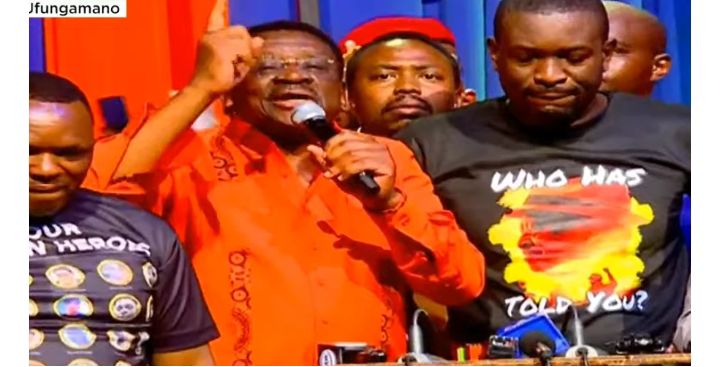
The Linda Mwananchi faction of the Orange Democratic Movement (ODM) found itself in a tense standoff with police officers at Ufungamano House, Nairobi, during a planned ‘People’s’ National Delegates Convention (NDC). The gathering, aimed at consolidating party leadership and addressing internal concerns, was momentarily disrupted when police officers attempted to prevent attendees from accessing the venue.
Leaders of the faction, however, managed to breach the police barricade and enter the premises, signaling their determination to proceed with the meeting despite the law enforcement presence. Eyewitnesses reported a brief confrontation at the entrance, which highlighted the faction’s frustration with repeated police interventions during party events.
Siaya Governor James Orengo, a prominent figure within the Linda Mwananchi faction, publicly reprimanded the officers, warning them against obstructing what he described as a legitimate political gathering. Speaking firmly to the officers, Orengo said, “If there's a day we're willing to die for our country, it's today. Don't try anything stupid, usilete upumbavu, tumechoka na nyinyi. Kasongo aende ama asiende. Sisi ni Wantam.”
Governor Orengo further questioned the rationale behind police efforts to stop the meeting, emphasizing that party delegates were already present and that the gathering was properly constituted. He raised pointed questions to illustrate the legitimacy of the meeting: “This meeting is properly constituted, the SG ni nani? Sifuna yuko ama hayuko? Deputy Party leader Osotsi yuko ama hayuko? Babu Owino yuko ama hayuko?”
Nairobi Senator Edwin Sifuna, speaking on behalf of the Linda Mwananchi faction, framed the NDC as a response to perceived irregularities within the party leadership. He alleged that a parallel group was attempting to “auction” ODM to President William Ruto, highlighting the urgency of their gathering.
According to Sifuna, the speed with which Dr. Oburu Oginga was installed as party leader following the death of his brother and ODM stalwart Raila Odinga in India was alarming and lacked proper consultation with party members. He expressed disappointment that decisions affecting the party were made without the input of its grassroots membership.
"Huu ndo mkutano tumeandaa ili kuweka wazi kwamba chama chetu ODM kiko hatari sana. Wakora wameingia kwa chama," Sifuna stated, reiterating concerns about the integrity of the leadership transition.
Sifuna continued, noting that he had been directed to travel to India to assist in matters concerning Raila Odinga, only to return to Kenya and find that party leaders had already taken unilateral decisions about the succession.
“Tuliwaambia sisi tunataka kufanya NDC ambayo kila mtu anaenda kwa debe kuchagua viongozi wake. Ilinivunja moyo sana wakati ambayo mlinituma niende nichukue Raila kutoka India, wakora wanakaa mahali, ata Baba hajafika Kenya, tayari wamepanga vile watatachukua nafasi yake,” he explained.
He further questioned the legitimacy of Oburu Oginga’s swift installation, asking rhetorically, “Nikafika Kenya wakasema Oburu ndiyo party leader, nani amesema? Nyinyi mlichagua Oburu? Nani alisema?” This statement underlined the faction’s insistence on a more transparent and participatory leadership process.
Sifuna also emphasized the ideological differences between ODM under Raila Odinga and the United Democratic Alliance (UDA), noting that the current trajectory under the parallel leadership could undermine the party’s foundational principles. He expressed dismay at the use of state apparatus to influence internal party processes, stating, “Haiwezekani chama cha ODM isupport mtu ambaye anaweka polisi kuharibu mkutano huu.”
The confrontation at Ufangamano House coincided with another ODM gathering led by the Linda Ground faction, which was holding a Special Delegates Convention (SDC) at Jamhuri Grounds. This meeting aimed to ratify decisions previously made by the National Executive Council (NEC), highlighting the ongoing factional divide within the party.
Observers noted that the competing conventions illustrate deepening internal rifts in ODM, which have intensified following the passing of Raila Odinga. Both factions claim legitimacy and control over the party machinery, creating confusion among grassroots members and raising concerns about the future direction of one of Kenya’s oldest political parties.
Political analysts have expressed concern that continued police interventions in ODM’s internal meetings could further politicize law enforcement agencies, potentially setting a precedent that undermines party autonomy and the democratic process. Some experts suggest that the disputes should be resolved internally through dialogue and adherence to party rules to avoid escalating tensions.
Despite the standoff, the Linda Mwananchi faction succeeded in proceeding with its planned NDC, underlining its commitment to holding inclusive elections and safeguarding the party’s founding principles. Leaders attending the meeting reiterated their commitment to grassroots participation, promising that every party member would have a say in choosing future leaders.
As ODM navigates this critical period, the unfolding events underscore the importance of internal democracy, transparency, and respect for institutional processes within political parties. How the factions resolve these disputes could significantly influence the party’s cohesion, public perception, and performance in upcoming national elections.
The standoff at Ufangamano House, therefore, represents more than just a confrontation with law enforcement—it signals a critical moment in ODM’s political evolution, reflecting broader challenges facing Kenyan political parties in balancing leadership succession, party unity, and democratic principles.
Leaders of the faction, however, managed to breach the police barricade and enter the premises, signaling their determination to proceed with the meeting despite the law enforcement presence. Eyewitnesses reported a brief confrontation at the entrance, which highlighted the faction’s frustration with repeated police interventions during party events.
Siaya Governor James Orengo, a prominent figure within the Linda Mwananchi faction, publicly reprimanded the officers, warning them against obstructing what he described as a legitimate political gathering. Speaking firmly to the officers, Orengo said, “If there's a day we're willing to die for our country, it's today. Don't try anything stupid, usilete upumbavu, tumechoka na nyinyi. Kasongo aende ama asiende. Sisi ni Wantam.”
Governor Orengo further questioned the rationale behind police efforts to stop the meeting, emphasizing that party delegates were already present and that the gathering was properly constituted. He raised pointed questions to illustrate the legitimacy of the meeting: “This meeting is properly constituted, the SG ni nani? Sifuna yuko ama hayuko? Deputy Party leader Osotsi yuko ama hayuko? Babu Owino yuko ama hayuko?”
Nairobi Senator Edwin Sifuna, speaking on behalf of the Linda Mwananchi faction, framed the NDC as a response to perceived irregularities within the party leadership. He alleged that a parallel group was attempting to “auction” ODM to President William Ruto, highlighting the urgency of their gathering.
According to Sifuna, the speed with which Dr. Oburu Oginga was installed as party leader following the death of his brother and ODM stalwart Raila Odinga in India was alarming and lacked proper consultation with party members. He expressed disappointment that decisions affecting the party were made without the input of its grassroots membership.
"Huu ndo mkutano tumeandaa ili kuweka wazi kwamba chama chetu ODM kiko hatari sana. Wakora wameingia kwa chama," Sifuna stated, reiterating concerns about the integrity of the leadership transition.
Sifuna continued, noting that he had been directed to travel to India to assist in matters concerning Raila Odinga, only to return to Kenya and find that party leaders had already taken unilateral decisions about the succession.
“Tuliwaambia sisi tunataka kufanya NDC ambayo kila mtu anaenda kwa debe kuchagua viongozi wake. Ilinivunja moyo sana wakati ambayo mlinituma niende nichukue Raila kutoka India, wakora wanakaa mahali, ata Baba hajafika Kenya, tayari wamepanga vile watatachukua nafasi yake,” he explained.
He further questioned the legitimacy of Oburu Oginga’s swift installation, asking rhetorically, “Nikafika Kenya wakasema Oburu ndiyo party leader, nani amesema? Nyinyi mlichagua Oburu? Nani alisema?” This statement underlined the faction’s insistence on a more transparent and participatory leadership process.
Sifuna also emphasized the ideological differences between ODM under Raila Odinga and the United Democratic Alliance (UDA), noting that the current trajectory under the parallel leadership could undermine the party’s foundational principles. He expressed dismay at the use of state apparatus to influence internal party processes, stating, “Haiwezekani chama cha ODM isupport mtu ambaye anaweka polisi kuharibu mkutano huu.”
The confrontation at Ufangamano House coincided with another ODM gathering led by the Linda Ground faction, which was holding a Special Delegates Convention (SDC) at Jamhuri Grounds. This meeting aimed to ratify decisions previously made by the National Executive Council (NEC), highlighting the ongoing factional divide within the party.
Observers noted that the competing conventions illustrate deepening internal rifts in ODM, which have intensified following the passing of Raila Odinga. Both factions claim legitimacy and control over the party machinery, creating confusion among grassroots members and raising concerns about the future direction of one of Kenya’s oldest political parties.
Political analysts have expressed concern that continued police interventions in ODM’s internal meetings could further politicize law enforcement agencies, potentially setting a precedent that undermines party autonomy and the democratic process. Some experts suggest that the disputes should be resolved internally through dialogue and adherence to party rules to avoid escalating tensions.
Despite the standoff, the Linda Mwananchi faction succeeded in proceeding with its planned NDC, underlining its commitment to holding inclusive elections and safeguarding the party’s founding principles. Leaders attending the meeting reiterated their commitment to grassroots participation, promising that every party member would have a say in choosing future leaders.
As ODM navigates this critical period, the unfolding events underscore the importance of internal democracy, transparency, and respect for institutional processes within political parties. How the factions resolve these disputes could significantly influence the party’s cohesion, public perception, and performance in upcoming national elections.
The standoff at Ufangamano House, therefore, represents more than just a confrontation with law enforcement—it signals a critical moment in ODM’s political evolution, reflecting broader challenges facing Kenyan political parties in balancing leadership succession, party unity, and democratic principles.