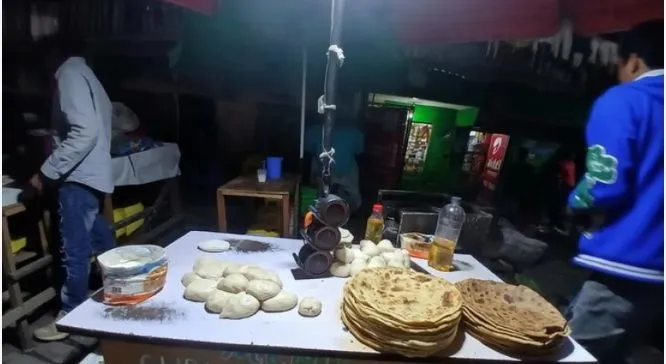
As Kenya continues to grapple with rising unemployment and the high cost of living, a growing number of young people in Nairobi are turning to informal businesses to make ends meet. Among these, chapati vending has emerged as a lifeline for many residents, particularly in areas like In the Pipeline, a bustling hub in Nairobi County.
The informal economy has long been a safety net for Kenyans facing job scarcity, and street-level trade has become an essential income source. Small-scale businesses such as kiosks, hawking, and roadside food vending now provide critical opportunities for survival. Chapati selling, in particular, has gained popularity due to its low startup costs, high demand, and ease of entry.
Charles Mutungi, a chapati vendor who has been in the trade for three years, explained why this business has attracted so many young people. “This business is easy to start as long as you have a place to operate and the ingredients,” he says. “With just flour, oil, water, and a bit of skill, anyone can begin.”
Mutungi’s observation is reflected across Nairobi, where chapati vendors rise before dawn to prepare their wares. The bread, a staple in Kenyan households, caters to early-morning workers, informal traders, and families seeking affordable meals.
“I wake up very early to prepare chapati because many of our customers are people heading to work,” Mutungi explains. “Chapati is something almost everyone can afford, whether you are a low-income or a higher-income earner.”
For many young people, this trade is more than a side hustle; it is their main source of income. Justus Mainga, another vendor, shared how the proceeds from his chapati sales have helped him support his family. “On a good day, I earn enough to feed my family, pay rent, and even cover school fees,” he says.
Despite its benefits, chapati vending is not without challenges. Many traders operate without formal licenses, making them vulnerable to harassment from county enforcement officers, often referred to as “kanjos.” This has created a tense environment where vendors must constantly navigate the risk of confiscation of equipment, bribes, or forced closure.
“We are always on the lookout because they can come and demand money since we are not licensed,” said Gerald Kamau, a young vendor in Nairobi. “Most of the time, it feels like a game of hide and seek.”
The volatility of operating in the informal sector is further compounded by rising commodity prices. Increased costs for flour, cooking oil, and fuel squeeze profit margins, sometimes forcing vendors to raise prices or reduce production, which can affect customer turnout.
“You work hard all day, but when the price of flour goes up, your profit drops,” explains Mutungi. “It’s a constant struggle to balance affordability for customers and sustainability for our business.”
Nevertheless, chapati vending remains an appealing option for young Kenyans facing limited alternatives. The trade requires minimal skills that can be learned quickly, offering a pathway to independence for youth who may not have formal education or experience in other sectors.
Experts argue that informal businesses like chapati vending play a crucial role in Kenya’s economic ecosystem. Dr. Faith Wambui, an economist specializing in urban livelihoods, notes that these small-scale enterprises absorb labor that formal employment cannot. “Street vendors and food sellers are a buffer against unemployment,” she says. “They not only support themselves but also provide affordable goods and services to the community.”
The need to formalize street vending has become a pressing topic in Nairobi. Traders are urging county and national governments to create frameworks that provide affordable licensing, protect vendors from harassment, and support business growth.
“We are asking the government to recognize what we do,” said Kamau. “We contribute to the economy and feed people. A formal system would give us security and dignity.”
Some counties in Kenya have already begun experimenting with models that integrate street vendors into the formal economy. By providing designated vending spaces, affordable licenses, and clear regulations, authorities aim to reduce conflict between traders and enforcement officers while enhancing public safety and hygiene.
However, implementation remains uneven, and many chapati vendors continue to navigate a precarious balance between survival and compliance. For now, the early-morning smell of frying chapati remains a symbol of resilience—a reminder of how Kenya’s youth adapt to challenging economic conditions through ingenuity, hard work, and determination.
As the country continues to face high unemployment and inflationary pressures, chapati vending and other informal businesses are likely to remain critical lifelines for many young people. With supportive policies, proper regulation, and community understanding, this sector could grow into a more secure and sustainable source of income, contributing meaningfully to both livelihoods and the broader Kenyan economy.
The informal economy has long been a safety net for Kenyans facing job scarcity, and street-level trade has become an essential income source. Small-scale businesses such as kiosks, hawking, and roadside food vending now provide critical opportunities for survival. Chapati selling, in particular, has gained popularity due to its low startup costs, high demand, and ease of entry.
Charles Mutungi, a chapati vendor who has been in the trade for three years, explained why this business has attracted so many young people. “This business is easy to start as long as you have a place to operate and the ingredients,” he says. “With just flour, oil, water, and a bit of skill, anyone can begin.”
Mutungi’s observation is reflected across Nairobi, where chapati vendors rise before dawn to prepare their wares. The bread, a staple in Kenyan households, caters to early-morning workers, informal traders, and families seeking affordable meals.
“I wake up very early to prepare chapati because many of our customers are people heading to work,” Mutungi explains. “Chapati is something almost everyone can afford, whether you are a low-income or a higher-income earner.”
For many young people, this trade is more than a side hustle; it is their main source of income. Justus Mainga, another vendor, shared how the proceeds from his chapati sales have helped him support his family. “On a good day, I earn enough to feed my family, pay rent, and even cover school fees,” he says.
Despite its benefits, chapati vending is not without challenges. Many traders operate without formal licenses, making them vulnerable to harassment from county enforcement officers, often referred to as “kanjos.” This has created a tense environment where vendors must constantly navigate the risk of confiscation of equipment, bribes, or forced closure.
“We are always on the lookout because they can come and demand money since we are not licensed,” said Gerald Kamau, a young vendor in Nairobi. “Most of the time, it feels like a game of hide and seek.”
The volatility of operating in the informal sector is further compounded by rising commodity prices. Increased costs for flour, cooking oil, and fuel squeeze profit margins, sometimes forcing vendors to raise prices or reduce production, which can affect customer turnout.
“You work hard all day, but when the price of flour goes up, your profit drops,” explains Mutungi. “It’s a constant struggle to balance affordability for customers and sustainability for our business.”
Nevertheless, chapati vending remains an appealing option for young Kenyans facing limited alternatives. The trade requires minimal skills that can be learned quickly, offering a pathway to independence for youth who may not have formal education or experience in other sectors.
Experts argue that informal businesses like chapati vending play a crucial role in Kenya’s economic ecosystem. Dr. Faith Wambui, an economist specializing in urban livelihoods, notes that these small-scale enterprises absorb labor that formal employment cannot. “Street vendors and food sellers are a buffer against unemployment,” she says. “They not only support themselves but also provide affordable goods and services to the community.”
The need to formalize street vending has become a pressing topic in Nairobi. Traders are urging county and national governments to create frameworks that provide affordable licensing, protect vendors from harassment, and support business growth.
“We are asking the government to recognize what we do,” said Kamau. “We contribute to the economy and feed people. A formal system would give us security and dignity.”
Some counties in Kenya have already begun experimenting with models that integrate street vendors into the formal economy. By providing designated vending spaces, affordable licenses, and clear regulations, authorities aim to reduce conflict between traders and enforcement officers while enhancing public safety and hygiene.
However, implementation remains uneven, and many chapati vendors continue to navigate a precarious balance between survival and compliance. For now, the early-morning smell of frying chapati remains a symbol of resilience—a reminder of how Kenya’s youth adapt to challenging economic conditions through ingenuity, hard work, and determination.
As the country continues to face high unemployment and inflationary pressures, chapati vending and other informal businesses are likely to remain critical lifelines for many young people. With supportive policies, proper regulation, and community understanding, this sector could grow into a more secure and sustainable source of income, contributing meaningfully to both livelihoods and the broader Kenyan economy.