Cabinet Secretary for Water, Sanitation and Irrigation, Eng. Eric Mugaa, has unveiled a comprehensive government strategy aimed at ensuring a steady water supply across Kenya, with a strong focus on boosting agricultural productivity through irrigation-based farming. The announcements, made during the government podcast Bonga Na Gava, signal a major shift in the country’s approach to agriculture and water management, emphasizing the need to adapt to climate change while modernizing infrastructure.
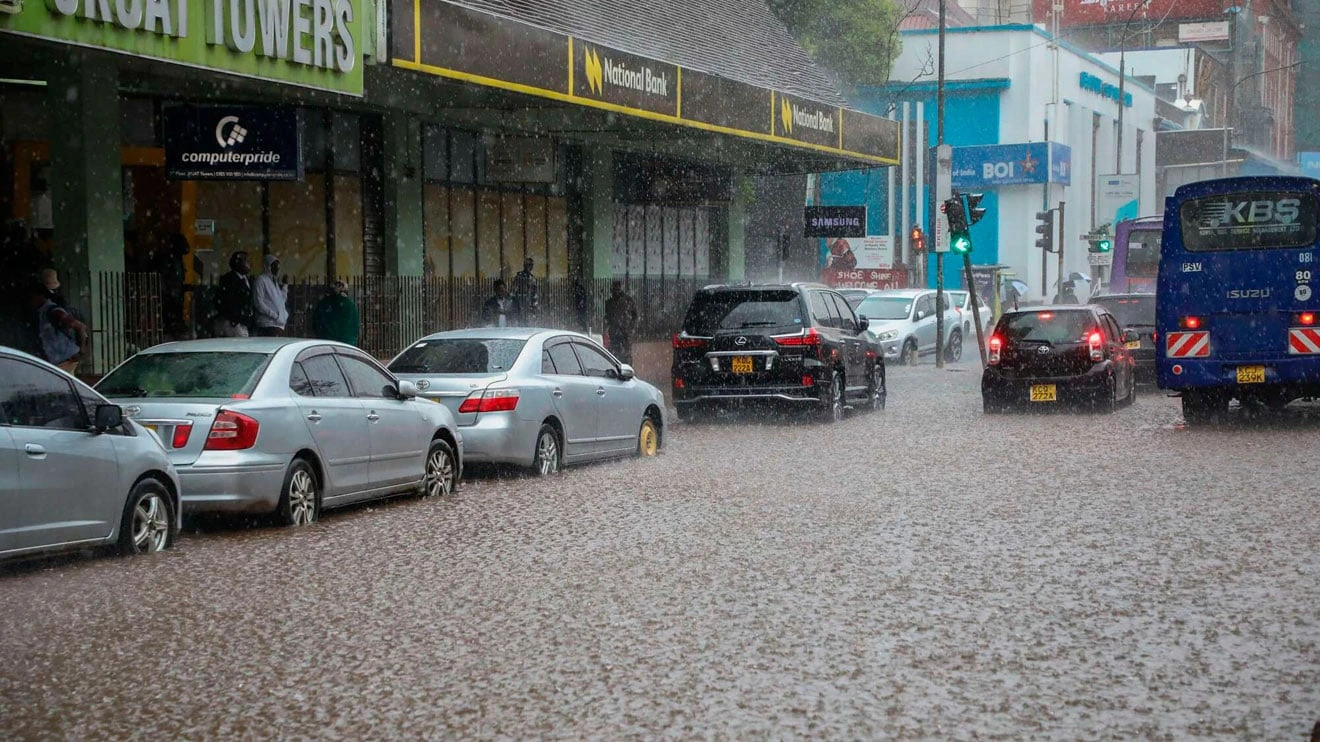
Speaking on the podcast, Eng. Mugaa highlighted that reliance on rain-fed agriculture has become increasingly unsustainable due to unpredictable weather patterns fueled by climate change. “Climate change has made traditional rain-fed agriculture unreliable. In February, we witnessed unexpected rainfall that disrupted planting cycles. While the government has successfully provided subsidized fertilizer to farmers, unpredictable weather continues to make timing difficult. Our goal is to transition to irrigation-based farming, allowing crops to be grown at any time, regardless of rainfall,” he explained.
The CS stressed that this transition is not just about mitigating losses caused by erratic rainfall but is also about transforming Kenya’s agricultural sector into a more resilient and productive system capable of supporting the country’s growing population. By shifting toward irrigation, farmers will have greater control over their planting and harvesting cycles, reducing dependency on seasonal rains and mitigating the impact of droughts and floods.
Financing Mega-Dams Through the National Infrastructure Fund
One of the key pillars of this strategy involves the construction of new dams to support irrigation. To fund these ambitious projects, Eng. Mugaa revealed that the ministry plans to leverage the National Infrastructure Fund (NIF), a financing mechanism designed to reduce reliance on allocations from the National Treasury. He described the approach as “asset conversion,” whereby existing government assets are repurposed into capital for new development projects.
“Rather than simply selling assets, we are converting mature assets into resources that can be used to fund new infrastructure. This allows us to move from relying solely on exchequer funding to more sustainable financing models,” he said.
The use of the NIF is expected to revolutionize how Kenya approaches large-scale infrastructure projects, particularly in the water sector. The fund will support economically viable projects and promote private sector participation through Public-Private Partnerships (PPP). “The National Infrastructure Fund will accelerate the construction of mega-dams by creating a framework where private investors can participate. Through blended financing under the PPP model, we aim to make these projects financially sustainable while ensuring public benefit,” Eng. Mugaa added.
Balancing Investor Returns and Affordability
To address concerns about water affordability, Eng. Mugaa emphasized that the government will use the NIF as a buffer to reconcile investor returns with regulated water tariffs set by the Water Services Regulatory Board (WASREB). This approach aims to ensure that while investors achieve viable returns, water remains affordable for all Kenyans.
“The NIF will bridge the gap between commercial returns and the regulated tariffs, ensuring that water projects remain attractive to investors while safeguarding affordability for citizens. This is a critical step in achieving long-term sustainability in the water sector,” the CS explained.
Eng. Mugaa also provided updates on the Itare Dam Water Project in Nakuru County, a flagship project allocated KSh38 billion. The government is currently seeking a new contractor from Italy to complete the project after expressing concerns about the initial contractor’s proposal.
“We conducted thorough due diligence, including sending a team to Italy to assess the proposed contractor. However, we were not satisfied with the arrangement. As a result, we have formally requested the Italian government to support us in identifying a new contractor to complete the project,” he said.
The Itare Dam project, once completed, is expected to provide a reliable water source for both domestic use and agricultural irrigation, further supporting the government’s goal of enhancing food security. The decision to re-evaluate the contractor demonstrates the ministry’s commitment to transparency and the efficient use of public funds, ensuring that taxpayer money translates into tangible benefits for citizens.
Experts have welcomed the government’s approach, noting that Kenya’s agricultural sector has long suffered from the limitations of rain-fed farming. According to recent studies, erratic rainfall and prolonged droughts have resulted in fluctuating crop yields, leaving farmers vulnerable to food insecurity and financial instability. By investing in irrigation infrastructure and leveraging innovative financing models, the government aims to create a more resilient agricultural ecosystem.
The move toward irrigation-based agriculture also aligns with Kenya’s broader climate adaptation strategy. With climate change projections indicating increased variability in rainfall patterns, establishing a dependable water infrastructure is critical. Dams and irrigation systems will not only support crop production but also provide water for livestock, aquaculture, and other rural economic activities, creating multiple streams of livelihood for communities across the country.
Moreover, the emphasis on Public-Private Partnerships is expected to attract international investment and technical expertise, bringing modern irrigation technologies and efficient water management practices to Kenya. This could lead to increased productivity, reduced post-harvest losses, and enhanced competitiveness of Kenyan agricultural products in regional and global market.
Cabinet Secretary Eng. Eric Mugaa’s announcement marks a significant step toward modernizing Kenya’s water and agricultural sectors. By focusing on the construction of mega-dams, leveraging the National Infrastructure Fund, and encouraging private sector participation, the government aims to provide sustainable solutions to the challenges posed by climate change. The integration of irrigation-based farming, coupled with careful financial planning and project oversight, promises a future where Kenyan farmers can thrive regardless of unpredictable weather, ensuring food security and economic growth for the nation.
With projects like the Itare Dam and other planned infrastructure initiatives, Kenya is positioning itself to become more resilient in the face of climate uncertainty, while simultaneously fostering innovation and investment in critical sectors that underpin the country’s development.
Speaking on the podcast, Eng. Mugaa highlighted that reliance on rain-fed agriculture has become increasingly unsustainable due to unpredictable weather patterns fueled by climate change. “Climate change has made traditional rain-fed agriculture unreliable. In February, we witnessed unexpected rainfall that disrupted planting cycles. While the government has successfully provided subsidized fertilizer to farmers, unpredictable weather continues to make timing difficult. Our goal is to transition to irrigation-based farming, allowing crops to be grown at any time, regardless of rainfall,” he explained.
The CS stressed that this transition is not just about mitigating losses caused by erratic rainfall but is also about transforming Kenya’s agricultural sector into a more resilient and productive system capable of supporting the country’s growing population. By shifting toward irrigation, farmers will have greater control over their planting and harvesting cycles, reducing dependency on seasonal rains and mitigating the impact of droughts and floods.
Financing Mega-Dams Through the National Infrastructure Fund
One of the key pillars of this strategy involves the construction of new dams to support irrigation. To fund these ambitious projects, Eng. Mugaa revealed that the ministry plans to leverage the National Infrastructure Fund (NIF), a financing mechanism designed to reduce reliance on allocations from the National Treasury. He described the approach as “asset conversion,” whereby existing government assets are repurposed into capital for new development projects.
“Rather than simply selling assets, we are converting mature assets into resources that can be used to fund new infrastructure. This allows us to move from relying solely on exchequer funding to more sustainable financing models,” he said.
The use of the NIF is expected to revolutionize how Kenya approaches large-scale infrastructure projects, particularly in the water sector. The fund will support economically viable projects and promote private sector participation through Public-Private Partnerships (PPP). “The National Infrastructure Fund will accelerate the construction of mega-dams by creating a framework where private investors can participate. Through blended financing under the PPP model, we aim to make these projects financially sustainable while ensuring public benefit,” Eng. Mugaa added.
Balancing Investor Returns and Affordability
To address concerns about water affordability, Eng. Mugaa emphasized that the government will use the NIF as a buffer to reconcile investor returns with regulated water tariffs set by the Water Services Regulatory Board (WASREB). This approach aims to ensure that while investors achieve viable returns, water remains affordable for all Kenyans.
“The NIF will bridge the gap between commercial returns and the regulated tariffs, ensuring that water projects remain attractive to investors while safeguarding affordability for citizens. This is a critical step in achieving long-term sustainability in the water sector,” the CS explained.
Eng. Mugaa also provided updates on the Itare Dam Water Project in Nakuru County, a flagship project allocated KSh38 billion. The government is currently seeking a new contractor from Italy to complete the project after expressing concerns about the initial contractor’s proposal.
“We conducted thorough due diligence, including sending a team to Italy to assess the proposed contractor. However, we were not satisfied with the arrangement. As a result, we have formally requested the Italian government to support us in identifying a new contractor to complete the project,” he said.
The Itare Dam project, once completed, is expected to provide a reliable water source for both domestic use and agricultural irrigation, further supporting the government’s goal of enhancing food security. The decision to re-evaluate the contractor demonstrates the ministry’s commitment to transparency and the efficient use of public funds, ensuring that taxpayer money translates into tangible benefits for citizens.
Experts have welcomed the government’s approach, noting that Kenya’s agricultural sector has long suffered from the limitations of rain-fed farming. According to recent studies, erratic rainfall and prolonged droughts have resulted in fluctuating crop yields, leaving farmers vulnerable to food insecurity and financial instability. By investing in irrigation infrastructure and leveraging innovative financing models, the government aims to create a more resilient agricultural ecosystem.
The move toward irrigation-based agriculture also aligns with Kenya’s broader climate adaptation strategy. With climate change projections indicating increased variability in rainfall patterns, establishing a dependable water infrastructure is critical. Dams and irrigation systems will not only support crop production but also provide water for livestock, aquaculture, and other rural economic activities, creating multiple streams of livelihood for communities across the country.
Moreover, the emphasis on Public-Private Partnerships is expected to attract international investment and technical expertise, bringing modern irrigation technologies and efficient water management practices to Kenya. This could lead to increased productivity, reduced post-harvest losses, and enhanced competitiveness of Kenyan agricultural products in regional and global market.
Cabinet Secretary Eng. Eric Mugaa’s announcement marks a significant step toward modernizing Kenya’s water and agricultural sectors. By focusing on the construction of mega-dams, leveraging the National Infrastructure Fund, and encouraging private sector participation, the government aims to provide sustainable solutions to the challenges posed by climate change. The integration of irrigation-based farming, coupled with careful financial planning and project oversight, promises a future where Kenyan farmers can thrive regardless of unpredictable weather, ensuring food security and economic growth for the nation.
With projects like the Itare Dam and other planned infrastructure initiatives, Kenya is positioning itself to become more resilient in the face of climate uncertainty, while simultaneously fostering innovation and investment in critical sectors that underpin the country’s development.