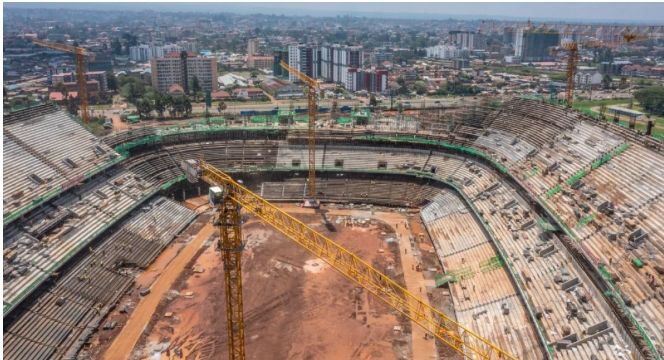
The Senate Committee on Roads, Transportation, and Infrastructure conducted an extensive inspection tour of Talanta Stadium in Nairobi on Thursday to assess progress on the facility and its readiness to host matches during next year’s Africa Cup of Nations (AFCON), branded Pamoja 2027. The inspection comes as Kenya intensifies preparations for the continental tournament, which it will co-host alongside Uganda and Tanzania.
Led by Committee Chair Eddy Oketch, the lawmakers closely examined the stadium’s ongoing construction works, scrutinized remaining timelines, and evaluated whether the project represents value for money for Kenyan taxpayers. The visit is part of a broader parliamentary oversight effort aimed at ensuring that major national infrastructure projects are delivered efficiently, transparently, and in a manner that benefits citizens.
During the tour, Senator Oketch highlighted the initial projections given by contractors, which included teams from both the military and the Ministry of Sports. Originally, completion of the stadium was expected by May of this year. However, following on-site assessments and discussions with the contractors, it became clear that a more realistic timeline points to July.
“The physical construction of Talanta Stadium appears to be progressing well,” Senator Oketch said. “However, our work is not only about the timelines. We are focused on ensuring that Kenyans get value for every shilling spent. We will continue to monitor the procurement process and the financial expenditure to make certain everything is above board.”
The committee’s inspection also comes against the backdrop of earlier tensions in the Senate over accountability and the role of the Ministry of Sports. A previously scheduled meeting with Sports Cabinet Secretary Salim Mvurya was cut short after senators expressed dissatisfaction over his absence, accusing him of not taking the preparations seriously. This incident underscored the importance lawmakers place on direct oversight of high-profile projects, particularly those linked to Kenya’s international sporting image.
Talanta Stadium is set to be one of Kenya’s flagship venues for the 2027 Africa Cup of Nations, and its timely completion is seen as crucial to the country’s ability to successfully stage the tournament. The stadium, once completed, is expected to meet international standards for football facilities, with modern seating, lighting, media infrastructure, and security systems, positioning it as a world-class sporting venue.
Senator Oketch emphasized that the committee’s mandate extends beyond construction progress. “We are equally concerned about how contracts were awarded, how procurement processes were handled, and whether the overall expenditure reflects value for money. It is critical that such a high-profile project not only meets technical standards but also delivers on financial accountability,” he said.
The inspection involved a detailed review of the stadium’s structural and finishing works, including seating arrangements, pitch quality, locker rooms, and spectator amenities. Contractors on-site provided updates on the remaining tasks, which include final touches on the playing surface, installation of electronic scoreboards, and completion of auxiliary facilities such as parking and access roads.
The senators also discussed the broader implications of Talanta Stadium’s completion. Beyond hosting AFCON matches, the facility is expected to serve as a hub for local and international sporting events, community engagement programs, and youth development initiatives. It is envisaged that the stadium will contribute to Nairobi’s social and economic landscape by creating jobs, stimulating local businesses, and enhancing Kenya’s profile as a destination for major sporting events.
Historically, Kenya has faced challenges in completing large-scale infrastructure projects on time and within budget. Past stadium projects have occasionally suffered from delays, cost overruns, and allegations of irregularities in procurement. This context makes the Senate’s insistence on value-for-money assessments and adherence to proper procurement procedures especially relevant.
The upcoming Africa Cup of Nations, under the “Pamoja 2027” banner, represents a significant milestone for Kenya and its co-hosts. The tournament will draw teams, fans, and media from across the continent, placing Kenya in the international spotlight. Ensuring that stadiums like Talanta meet global standards is therefore not only a matter of sporting pride but also national reputation.
“The success of AFCON 2027 will be measured not just by the quality of the matches, but by the legacy we leave behind,” Senator Oketch noted. “These facilities must serve our communities long after the tournament is over, and this is why we are thorough in our oversight. Accountability and proper management of public funds are as important as the bricks and mortar.”
The committee’s inspection marks the beginning of a series of follow-up engagements with contractors, the Ministry of Sports, and other stakeholders. Lawmakers are expected to submit detailed reports on their findings, which will inform parliamentary debates and recommendations on the project’s completion, financial management, and overall readiness for the tournament.
As Kenya prepares to welcome Africa’s footballing elite, all eyes remain on Talanta Stadium. Its timely completion, adherence to international standards, and transparent use of public funds will be critical not only for hosting a successful AFCON 2027 but also for demonstrating Kenya’s capacity to manage major sporting infrastructure projects efficiently and responsibly.
Led by Committee Chair Eddy Oketch, the lawmakers closely examined the stadium’s ongoing construction works, scrutinized remaining timelines, and evaluated whether the project represents value for money for Kenyan taxpayers. The visit is part of a broader parliamentary oversight effort aimed at ensuring that major national infrastructure projects are delivered efficiently, transparently, and in a manner that benefits citizens.
During the tour, Senator Oketch highlighted the initial projections given by contractors, which included teams from both the military and the Ministry of Sports. Originally, completion of the stadium was expected by May of this year. However, following on-site assessments and discussions with the contractors, it became clear that a more realistic timeline points to July.
“The physical construction of Talanta Stadium appears to be progressing well,” Senator Oketch said. “However, our work is not only about the timelines. We are focused on ensuring that Kenyans get value for every shilling spent. We will continue to monitor the procurement process and the financial expenditure to make certain everything is above board.”
The committee’s inspection also comes against the backdrop of earlier tensions in the Senate over accountability and the role of the Ministry of Sports. A previously scheduled meeting with Sports Cabinet Secretary Salim Mvurya was cut short after senators expressed dissatisfaction over his absence, accusing him of not taking the preparations seriously. This incident underscored the importance lawmakers place on direct oversight of high-profile projects, particularly those linked to Kenya’s international sporting image.
Talanta Stadium is set to be one of Kenya’s flagship venues for the 2027 Africa Cup of Nations, and its timely completion is seen as crucial to the country’s ability to successfully stage the tournament. The stadium, once completed, is expected to meet international standards for football facilities, with modern seating, lighting, media infrastructure, and security systems, positioning it as a world-class sporting venue.
Senator Oketch emphasized that the committee’s mandate extends beyond construction progress. “We are equally concerned about how contracts were awarded, how procurement processes were handled, and whether the overall expenditure reflects value for money. It is critical that such a high-profile project not only meets technical standards but also delivers on financial accountability,” he said.
The inspection involved a detailed review of the stadium’s structural and finishing works, including seating arrangements, pitch quality, locker rooms, and spectator amenities. Contractors on-site provided updates on the remaining tasks, which include final touches on the playing surface, installation of electronic scoreboards, and completion of auxiliary facilities such as parking and access roads.
The senators also discussed the broader implications of Talanta Stadium’s completion. Beyond hosting AFCON matches, the facility is expected to serve as a hub for local and international sporting events, community engagement programs, and youth development initiatives. It is envisaged that the stadium will contribute to Nairobi’s social and economic landscape by creating jobs, stimulating local businesses, and enhancing Kenya’s profile as a destination for major sporting events.
Historically, Kenya has faced challenges in completing large-scale infrastructure projects on time and within budget. Past stadium projects have occasionally suffered from delays, cost overruns, and allegations of irregularities in procurement. This context makes the Senate’s insistence on value-for-money assessments and adherence to proper procurement procedures especially relevant.
The upcoming Africa Cup of Nations, under the “Pamoja 2027” banner, represents a significant milestone for Kenya and its co-hosts. The tournament will draw teams, fans, and media from across the continent, placing Kenya in the international spotlight. Ensuring that stadiums like Talanta meet global standards is therefore not only a matter of sporting pride but also national reputation.
“The success of AFCON 2027 will be measured not just by the quality of the matches, but by the legacy we leave behind,” Senator Oketch noted. “These facilities must serve our communities long after the tournament is over, and this is why we are thorough in our oversight. Accountability and proper management of public funds are as important as the bricks and mortar.”
The committee’s inspection marks the beginning of a series of follow-up engagements with contractors, the Ministry of Sports, and other stakeholders. Lawmakers are expected to submit detailed reports on their findings, which will inform parliamentary debates and recommendations on the project’s completion, financial management, and overall readiness for the tournament.
As Kenya prepares to welcome Africa’s footballing elite, all eyes remain on Talanta Stadium. Its timely completion, adherence to international standards, and transparent use of public funds will be critical not only for hosting a successful AFCON 2027 but also for demonstrating Kenya’s capacity to manage major sporting infrastructure projects efficiently and responsibly.