The Gen Z Uprising: Redefining Civic Engagement
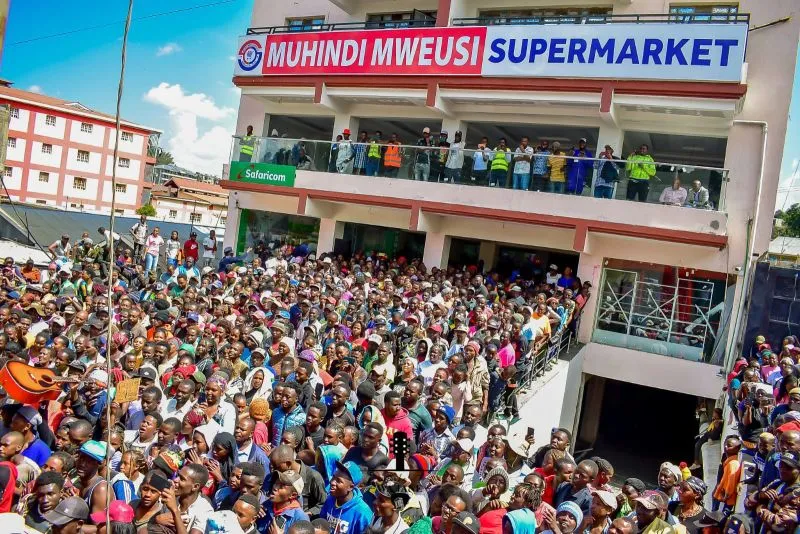
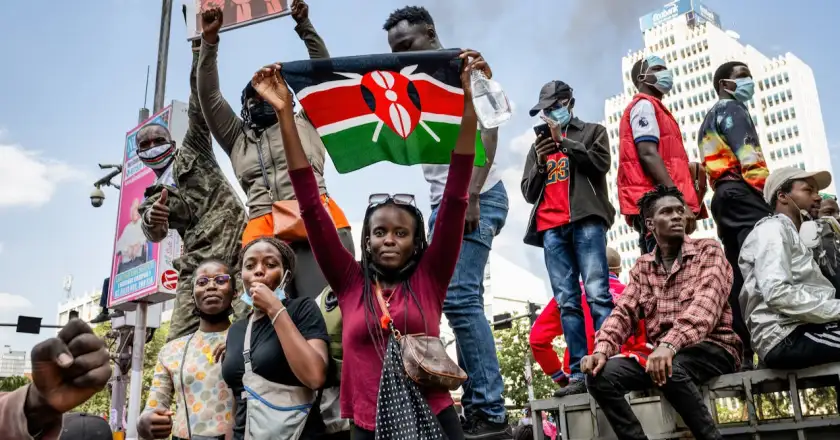
Kenya's political landscape is being reshaped by a historic youth-led movement that has fundamentally altered traditional power dynamics. Sparked by opposition to the 2024 Finance Bill and fueled by the custodial killing of blogger Albert Ojwang, Generation Z (born 1997-2012) has mobilized through decentralized digital networks rather than conventional opposition structures. This movement is characterized by its **tribeless nature**—consciously rejecting Kenya's legacy of ethnic politicking—and its **self-sustaining ecosystems** where protesters crowdfund medical aid, legal support, and mutual assistance without foreign NGO involvement . Surveys reveal that 60% of young Kenyans participated in the June 2025 protests either physically or online, with 66% of in-person protesters witnessing looting, assaults, or killings . Despite facing internet blackouts and state-sponsored troll armies, these digital natives have maintained momentum through encrypted apps and viral hashtags like #RutoMustGo, demonstrating unprecedented resilience against repression.
Economic Fractures: The Powder Keg Beneath
Beneath the political turmoil lies an economic crisis that fuels perpetual discontent:
- **Youth unemployment stands at 67%**, with nearly half of Gen Z protesters holding college degrees but no viable career pathways .
- **Living costs have become untenable**, with bread prices surging 45% since 2022 and inflation hovering at 9.2% .
- **Fiscal policies remain contradictory**: While the government projects 5.7% GDP growth for 2025, it simultaneously implements IMF-mandated austerity measures that disproportionately burden the poor .
These conditions have transformed economic grievances into a powerful mobilizing force, with 85% of Kenyans citing unemployment as their top concern, followed closely by living costs (84%) and corruption (82%) .
Media Revolution: Bypassing Traditional Gatekeepers
Kenya's information ecosystem has undergone a radical transformation, with traditional media losing influence to social platforms:
- **65% of protesters rely on social media** for real-time information, using TikTok live streams to document police brutality and WhatsApp groups to coordinate safe routes .
- **Trust in television has paradoxically increased** to 65% despite declining viewership, as citizens seek reliable sources amid disinformation floods .
- **Mainstream outlets face existential threats**: Nation Media Group and Standard Group suffer advertising boycotts and newsroom downsizing, with journalists reporting salary delays of several months .
This shift has enabled ordinary citizens to become frontline reporters, blurring lines between journalism and activism. However, it also creates vulnerabilities: fact-checking organizations like PesaCheck battle deepfakes and state-sponsored disinformation daily .
Institutional Erosion: Accountability in Crisis
The weakening of democratic guardrails compounds Kenya's political volatility:
- **Security forces operate with impunity**, conducting over 80 enforced disappearances of activists since 2024 and extrajudicial killings like the point-blank shooting of vendor Joshua Eli .
- **Anti-corruption mechanisms are failing** as $3 billion embezzlement scandals go unpunished, while political elites engage in opaque "empowerment forums" resembling early campaign events .
- **Judicial independence faces unprecedented attacks**, with Chief Justice Martha Koome controversially likening protest damage to "terrorism" .
Mount Kenya's Political Earthquake
The October 2024 impeachment of Deputy President Rigathi Gachagua triggered seismic shifts in Kenya's political geography:
- **70% of Kikuyu voters opposed Gachagua's removal**, fracturing the ruling coalition's base in Kenya's largest voting bloc .
- Replacement leader Kithure Kindiki lacks grassroots connections, weakening the government's 2027 reelection machinery while empowering Gachagua as a government critic .
- This vacuum has inadvertently aided Gen Z's cross-ethnic solidarity, though it risks igniting dangerous ethno-political backlash as elections approach .
Pathways to Renewal: Beyond Protest
Amid the crisis, constructive initiatives offer potential pathways:
Economic Innovation
- **Digital finance leadership**: M-Pesa and "Silicon Savannah" tech hubs attracted $638 million in venture capital during 2024, creating alternative employment streams .
- **Agricultural modernization**: Climate-smart farming techniques boosted yields by 41% for 326,000 smallholders, though scaling remains a challenge .
Governance Experiments
- **County-level devolution**: Local governments increasingly bypass Nairobi bottlenecks, with 45 counties adopting digital land registries and participatory budgeting .
- **Transparency initiatives**: Blockchain-based procurement systems are being piloted to combat corruption in infrastructure projects .
International Partnerships
- **World Bank commitment**: A $6.5 billion portfolio funds critical infrastructure, including geothermal energy expansion that now provides 45% of Kenya's power .
- **Climate finance innovation**: The MIGA-supported 52MWp solar project demonstrates how green investment can align with development needs .
The Horizon: Three Possible Futures
1. **Democratic Renaissance (Probability: 30%)**
Gen Z forges alliances with reformist judges, progressive clergy, and ethical business leaders to force constitutional reforms establishing youth governance quotas and independent police oversight .
2. **Authoritarian Resurgence (Probability: 50%)**
Expanded anti-terror laws criminalize protests while state-backed troll armies flood digital spaces with disinformation ahead of contested 2027 elections .
3. **Hybrid Transition (Probability: 20%)**
International mediators broker power-sharing agreements conditional on wealth taxes targeting offshore elite assets and police demilitarization .
"The streets must remain a legitimate space of political participation. For Gen Z's challenge to state power is not a threat to democracy—it *is* democracy in its purest form."
- *Al Jazeera Analysis, July 2025*
Kenya's turbulence represents not democratic backsliding but **democratic recomposition**. As traditional institutions fray, citizens—particularly youth—are forging alternative networks of accountability, mutual aid, and civic action. The ultimate political transformation may arise not from presidential palaces but from this quiet revolution in Kenya's social fabric .
Kenya's political landscape is being reshaped by a historic youth-led movement that has fundamentally altered traditional power dynamics. Sparked by opposition to the 2024 Finance Bill and fueled by the custodial killing of blogger Albert Ojwang, Generation Z (born 1997-2012) has mobilized through decentralized digital networks rather than conventional opposition structures. This movement is characterized by its **tribeless nature**—consciously rejecting Kenya's legacy of ethnic politicking—and its **self-sustaining ecosystems** where protesters crowdfund medical aid, legal support, and mutual assistance without foreign NGO involvement . Surveys reveal that 60% of young Kenyans participated in the June 2025 protests either physically or online, with 66% of in-person protesters witnessing looting, assaults, or killings . Despite facing internet blackouts and state-sponsored troll armies, these digital natives have maintained momentum through encrypted apps and viral hashtags like #RutoMustGo, demonstrating unprecedented resilience against repression.
Economic Fractures: The Powder Keg Beneath
Beneath the political turmoil lies an economic crisis that fuels perpetual discontent:
- **Youth unemployment stands at 67%**, with nearly half of Gen Z protesters holding college degrees but no viable career pathways .
- **Living costs have become untenable**, with bread prices surging 45% since 2022 and inflation hovering at 9.2% .
- **Fiscal policies remain contradictory**: While the government projects 5.7% GDP growth for 2025, it simultaneously implements IMF-mandated austerity measures that disproportionately burden the poor .
These conditions have transformed economic grievances into a powerful mobilizing force, with 85% of Kenyans citing unemployment as their top concern, followed closely by living costs (84%) and corruption (82%) .
Media Revolution: Bypassing Traditional Gatekeepers
Kenya's information ecosystem has undergone a radical transformation, with traditional media losing influence to social platforms:
- **65% of protesters rely on social media** for real-time information, using TikTok live streams to document police brutality and WhatsApp groups to coordinate safe routes .
- **Trust in television has paradoxically increased** to 65% despite declining viewership, as citizens seek reliable sources amid disinformation floods .
- **Mainstream outlets face existential threats**: Nation Media Group and Standard Group suffer advertising boycotts and newsroom downsizing, with journalists reporting salary delays of several months .
This shift has enabled ordinary citizens to become frontline reporters, blurring lines between journalism and activism. However, it also creates vulnerabilities: fact-checking organizations like PesaCheck battle deepfakes and state-sponsored disinformation daily .
Institutional Erosion: Accountability in Crisis
The weakening of democratic guardrails compounds Kenya's political volatility:
- **Security forces operate with impunity**, conducting over 80 enforced disappearances of activists since 2024 and extrajudicial killings like the point-blank shooting of vendor Joshua Eli .
- **Anti-corruption mechanisms are failing** as $3 billion embezzlement scandals go unpunished, while political elites engage in opaque "empowerment forums" resembling early campaign events .
- **Judicial independence faces unprecedented attacks**, with Chief Justice Martha Koome controversially likening protest damage to "terrorism" .
Mount Kenya's Political Earthquake
The October 2024 impeachment of Deputy President Rigathi Gachagua triggered seismic shifts in Kenya's political geography:
- **70% of Kikuyu voters opposed Gachagua's removal**, fracturing the ruling coalition's base in Kenya's largest voting bloc .
- Replacement leader Kithure Kindiki lacks grassroots connections, weakening the government's 2027 reelection machinery while empowering Gachagua as a government critic .
- This vacuum has inadvertently aided Gen Z's cross-ethnic solidarity, though it risks igniting dangerous ethno-political backlash as elections approach .
Pathways to Renewal: Beyond Protest
Amid the crisis, constructive initiatives offer potential pathways:
Economic Innovation
- **Digital finance leadership**: M-Pesa and "Silicon Savannah" tech hubs attracted $638 million in venture capital during 2024, creating alternative employment streams .
- **Agricultural modernization**: Climate-smart farming techniques boosted yields by 41% for 326,000 smallholders, though scaling remains a challenge .
Governance Experiments
- **County-level devolution**: Local governments increasingly bypass Nairobi bottlenecks, with 45 counties adopting digital land registries and participatory budgeting .
- **Transparency initiatives**: Blockchain-based procurement systems are being piloted to combat corruption in infrastructure projects .
International Partnerships
- **World Bank commitment**: A $6.5 billion portfolio funds critical infrastructure, including geothermal energy expansion that now provides 45% of Kenya's power .
- **Climate finance innovation**: The MIGA-supported 52MWp solar project demonstrates how green investment can align with development needs .
The Horizon: Three Possible Futures
1. **Democratic Renaissance (Probability: 30%)**
Gen Z forges alliances with reformist judges, progressive clergy, and ethical business leaders to force constitutional reforms establishing youth governance quotas and independent police oversight .
2. **Authoritarian Resurgence (Probability: 50%)**
Expanded anti-terror laws criminalize protests while state-backed troll armies flood digital spaces with disinformation ahead of contested 2027 elections .
3. **Hybrid Transition (Probability: 20%)**
International mediators broker power-sharing agreements conditional on wealth taxes targeting offshore elite assets and police demilitarization .
"The streets must remain a legitimate space of political participation. For Gen Z's challenge to state power is not a threat to democracy—it *is* democracy in its purest form."
- *Al Jazeera Analysis, July 2025*
Kenya's turbulence represents not democratic backsliding but **democratic recomposition**. As traditional institutions fray, citizens—particularly youth—are forging alternative networks of accountability, mutual aid, and civic action. The ultimate political transformation may arise not from presidential palaces but from this quiet revolution in Kenya's social fabric .