Kenya is stepping up its fight against malaria with an ambitious plan to distribute 10 million mosquito nets nationwide. The initiative, announced by the Ministry of Health, comes as the country intensifies efforts to reduce malaria cases and deaths ahead of the upcoming World Malaria Day. Health officials say that consistent public awareness and preventive measures remain critical to sustaining the downward trend in malaria prevalence.
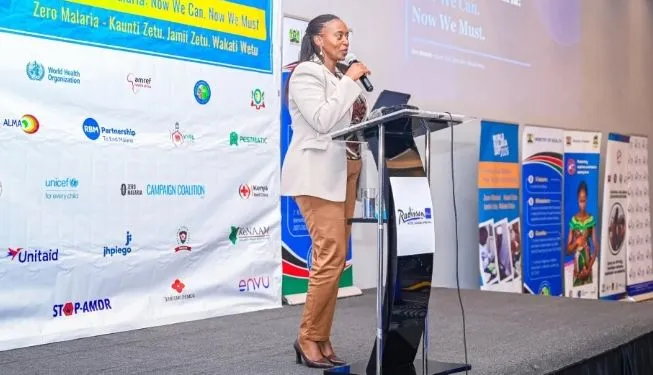
During a pre-World Malaria Day media breakfast briefing on Thursday, health officials highlighted significant progress in the country’s battle against the mosquito-borne disease. Dr. Kibor Keitany, head of the Malaria Programme at the Ministry of Health, revealed that national malaria prevalence has dropped from 8 percent in 2015 to 6 percent in 2020. The program is ambitiously targeting an 80 percent reduction in malaria cases and a 90 percent reduction in malaria-related deaths.
“Kenya has made substantial progress in controlling malaria, but much work remains,” Dr. Keitany said. “Our goal is to protect every Kenyan, especially the most vulnerable groups, and eventually eliminate malaria in targeted counties.”
Principal Secretary for Public Health and Professional Standards, Mary Muthoni, stressed that malaria remains a serious public health concern. She revealed that in 2024 alone, Kenya recorded 4.2 million malaria cases, with 75 percent of the population living in areas at risk. She noted that malaria accounts for approximately 18 percent of all patients visiting health facilities, with pregnant women and children under five years being the most vulnerable.
Despite these challenges, Muthoni emphasized that Kenya has achieved measurable successes. Malaria incidence dropped by five percent between 2023 and 2025, and malaria mortality fell by 32 percent during the previous national strategy cycle. She added that the Ministry of Health is now targeting Kirinyaga and Nyeri counties for total malaria elimination, with Kirinyaga set to host this year’s national World Malaria Day commemoration.
The PS called on the media to play a consistent role in malaria awareness campaigns, noting that efforts should not be limited to net distribution drives. “We must be cautious,” she said. “Media don’t wait for nets to disappear before talking about malaria. Awareness should be continuous, throughout the year.”
On the treatment front, Dr. Edwin Onyango, an expert in malaria therapy, explained that Kenya is introducing a multiple first-line therapy (MFT) approach to combat the risk of drug resistance. Artemisinin-based combination therapy (ACT) remains effective, but the new MFT rollout, which will start in Baringo, Busia, Kakamega, and Siaya counties before expanding nationwide, aims to ensure treatment efficacy and prevent the emergence of resistant malaria strains.
Dr. Onyango warned that drug resistance could be accelerated by poor-quality medicines, incomplete treatment, or incorrect dosing, emphasizing the importance of proper medication use.
Meanwhile, seasonal malaria chemoprevention efforts are also underway. Dr. Edwin Mbugua reported that a recent campaign reached 82,000 children in Turkana Central and Kakuma, areas with a malaria prevalence of approximately 39 percent—significantly higher than the national average. Seasonal peaks account for roughly 65 percent of malaria cases, occurring between June and October. The next phase of the campaign aims to target 135,000 children up to 10 years old in Kakuma and Kalobeyei, with medications provided through support from the United States government.
In addition to preventive and treatment efforts, the Ministry of Health has launched several technical and policy tools to strengthen Kenya’s malaria response. These include updated guidelines for malaria diagnosis and treatment, biosafety protocols for community-level rapid diagnostic testing, a clinical mentorship toolkit for healthcare workers, an implementation framework for malaria rapid diagnostic tests (RDTs), and an online entomological surveillance database to monitor mosquito populations and disease trends.
Experts say that these multi-pronged strategies are essential to achieving long-term success in reducing the malaria burden. “Malaria control requires more than distributing nets,” said Dr. Keitany. “It requires proper diagnosis, effective treatment, community engagement, and consistent monitoring. Only then can we see sustainable reductions in malaria cases and deaths.”
Malaria remains a significant threat to Kenya’s public health system, particularly in rural and semi-urban areas where access to healthcare services can be limited. Children under five, pregnant women, and immunocompromised individuals are most at risk of severe complications. According to the Ministry of Health, coordinated interventions such as mosquito net distribution, seasonal chemoprevention, and rapid treatment protocols are critical in protecting these vulnerable populations.
The 10 million mosquito nets are expected to reach households in high-risk regions before the peak malaria season, ensuring families have access to effective prevention measures. Health authorities are urging the public to use the nets consistently, seek prompt medical care if symptoms arise, and participate in community awareness programs.
With World Malaria Day approaching, Kenya’s renewed focus on prevention, treatment, and public engagement highlights the country’s commitment to a malaria-free future. As Dr. Keitany concluded, “Every net distributed, every child protected, and every case treated brings us one step closer to eliminating malaria in Kenya.”
By combining robust government initiatives, international support, and community participation, Kenya aims to continue its steady decline in malaria prevalence and ultimately achieve a future where malaria is no longer a leading cause of illness and death.
During a pre-World Malaria Day media breakfast briefing on Thursday, health officials highlighted significant progress in the country’s battle against the mosquito-borne disease. Dr. Kibor Keitany, head of the Malaria Programme at the Ministry of Health, revealed that national malaria prevalence has dropped from 8 percent in 2015 to 6 percent in 2020. The program is ambitiously targeting an 80 percent reduction in malaria cases and a 90 percent reduction in malaria-related deaths.
“Kenya has made substantial progress in controlling malaria, but much work remains,” Dr. Keitany said. “Our goal is to protect every Kenyan, especially the most vulnerable groups, and eventually eliminate malaria in targeted counties.”
Principal Secretary for Public Health and Professional Standards, Mary Muthoni, stressed that malaria remains a serious public health concern. She revealed that in 2024 alone, Kenya recorded 4.2 million malaria cases, with 75 percent of the population living in areas at risk. She noted that malaria accounts for approximately 18 percent of all patients visiting health facilities, with pregnant women and children under five years being the most vulnerable.
Despite these challenges, Muthoni emphasized that Kenya has achieved measurable successes. Malaria incidence dropped by five percent between 2023 and 2025, and malaria mortality fell by 32 percent during the previous national strategy cycle. She added that the Ministry of Health is now targeting Kirinyaga and Nyeri counties for total malaria elimination, with Kirinyaga set to host this year’s national World Malaria Day commemoration.
The PS called on the media to play a consistent role in malaria awareness campaigns, noting that efforts should not be limited to net distribution drives. “We must be cautious,” she said. “Media don’t wait for nets to disappear before talking about malaria. Awareness should be continuous, throughout the year.”
On the treatment front, Dr. Edwin Onyango, an expert in malaria therapy, explained that Kenya is introducing a multiple first-line therapy (MFT) approach to combat the risk of drug resistance. Artemisinin-based combination therapy (ACT) remains effective, but the new MFT rollout, which will start in Baringo, Busia, Kakamega, and Siaya counties before expanding nationwide, aims to ensure treatment efficacy and prevent the emergence of resistant malaria strains.
Dr. Onyango warned that drug resistance could be accelerated by poor-quality medicines, incomplete treatment, or incorrect dosing, emphasizing the importance of proper medication use.
Meanwhile, seasonal malaria chemoprevention efforts are also underway. Dr. Edwin Mbugua reported that a recent campaign reached 82,000 children in Turkana Central and Kakuma, areas with a malaria prevalence of approximately 39 percent—significantly higher than the national average. Seasonal peaks account for roughly 65 percent of malaria cases, occurring between June and October. The next phase of the campaign aims to target 135,000 children up to 10 years old in Kakuma and Kalobeyei, with medications provided through support from the United States government.
In addition to preventive and treatment efforts, the Ministry of Health has launched several technical and policy tools to strengthen Kenya’s malaria response. These include updated guidelines for malaria diagnosis and treatment, biosafety protocols for community-level rapid diagnostic testing, a clinical mentorship toolkit for healthcare workers, an implementation framework for malaria rapid diagnostic tests (RDTs), and an online entomological surveillance database to monitor mosquito populations and disease trends.
Experts say that these multi-pronged strategies are essential to achieving long-term success in reducing the malaria burden. “Malaria control requires more than distributing nets,” said Dr. Keitany. “It requires proper diagnosis, effective treatment, community engagement, and consistent monitoring. Only then can we see sustainable reductions in malaria cases and deaths.”
Malaria remains a significant threat to Kenya’s public health system, particularly in rural and semi-urban areas where access to healthcare services can be limited. Children under five, pregnant women, and immunocompromised individuals are most at risk of severe complications. According to the Ministry of Health, coordinated interventions such as mosquito net distribution, seasonal chemoprevention, and rapid treatment protocols are critical in protecting these vulnerable populations.
The 10 million mosquito nets are expected to reach households in high-risk regions before the peak malaria season, ensuring families have access to effective prevention measures. Health authorities are urging the public to use the nets consistently, seek prompt medical care if symptoms arise, and participate in community awareness programs.
With World Malaria Day approaching, Kenya’s renewed focus on prevention, treatment, and public engagement highlights the country’s commitment to a malaria-free future. As Dr. Keitany concluded, “Every net distributed, every child protected, and every case treated brings us one step closer to eliminating malaria in Kenya.”
By combining robust government initiatives, international support, and community participation, Kenya aims to continue its steady decline in malaria prevalence and ultimately achieve a future where malaria is no longer a leading cause of illness and death.